fbpx

“All it needs is people willing to listen”

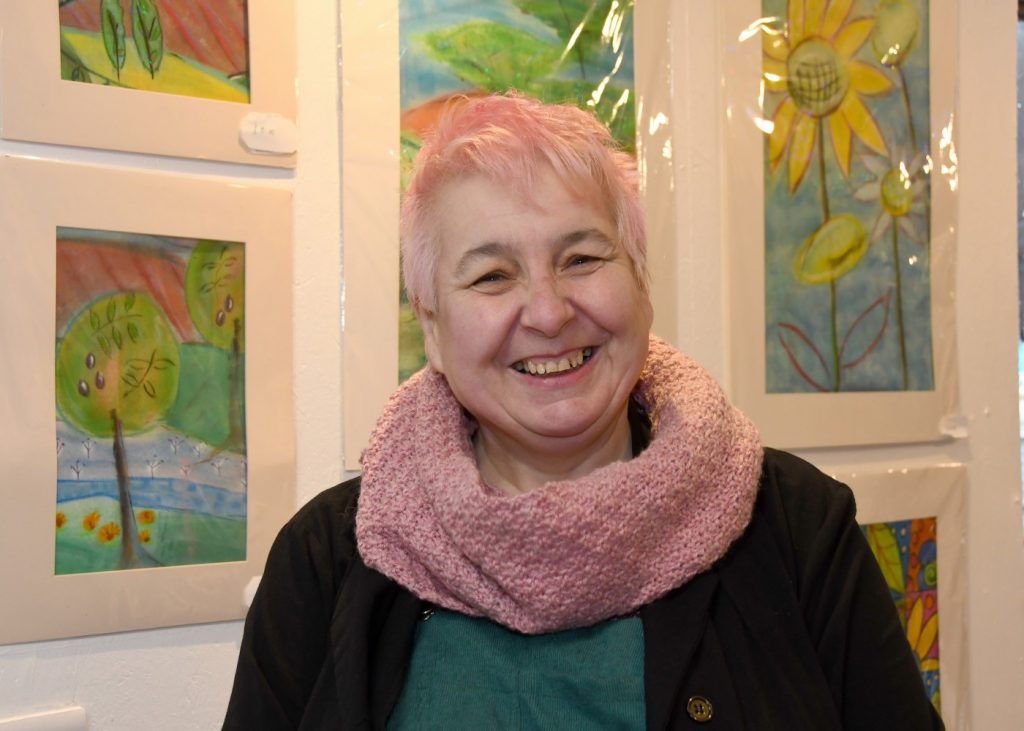
Stef Benstead looks back on her experiences as part of the first Manchester Poverty Truth Commission.

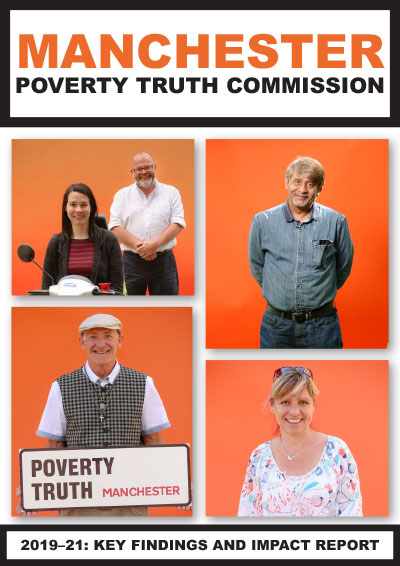
Read the Poverty Truth Commission's full report here

I was invited to join the Manchester Poverty Truth Commission by Niall Cooper, after he had met me a few times at various Christian conferences on poverty and related issues. It sounded like a great idea that addressed one of the challenges I regularly come up against in my work on disability and the social security system – that those with power don’t listen to those affected by their policies, and end up making bad policies due to wrong beliefs or assumptions about what the issues are and what are the causes, and therefore the solutions, of those issues.

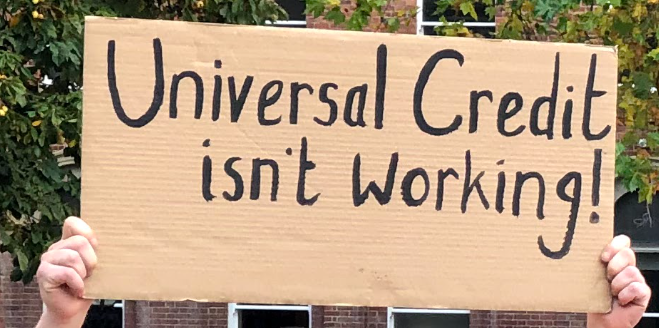
It’s really important that people with lived experience of an issue are an equal part of the policy-making process. Many of the problems with Universal Credit are because the government didn’t listen to people in poverty and on benefits; problems with benefits for sick and disabled people would also have been avoided if sick and disabled people had been listened to.

But it’s also hard for people with lived experience to get involved. It’s not just a lack of time, lack of contacts or lack of knowledge about how to get our voices heard. It’s also that the bureaucratic barriers that have built up and the harm that flawed policies have caused have built a painful wall between policy-makers, such as the local council, and the people affected. When policy-makers do want to start listening and put into practice what they are told, it isn’t enough to simply say that they’re listening. First there needs to be a relationship between the two sides, so that those of us in poverty and with lived experience of the impacts of policy can be reassured that this time the listening is genuine and the outcomes will be real and positive.

This is what Poverty Truth Commissions achieve. The time taken to share personal stories revealed a common humanity which I at least wasn’t expecting. I thought there would be a middle class/poorer people divide. In fact what I heard was business and civic leaders who had grown up in poverty, brought up by single parents on council estates; and grass-roots commissioners who, like me, had grown up middle-class only to fall into poverty later. Commissioners on both sides had experienced recent bereavement or relationship breakdown. These stories of our lives levelled the playing field: we realised that where we had ended up wasn’t representative of who we are as people, and that was as true for the business and civic commissioners as for the grass-roots commissioners.

The biggest impact for me was when one of the business and civic leaders took an idea that I had put forward, which from her perspective was unaffordable and unworkable at that point, and came back a month later with a revamped idea that could be made to work. I’m still working on this idea now and hope it will eventually come to fruition.

The PTCs break down barriers between the people who usually make policy and those who usually merely receive it. It does this by creating relationship between the two sides, teaming us up in a common fight against poverty and inhumanity. It can be a transformational process with ripple effects that continue long after the commission itself has formally finished. All it needs is people willing to listen.


Stef Benstead is a trustee of Church Action on Poverty, a grassroots commissioner in Manchester Poverty Truth Commission, and the author of Second Class Citizens: The treatment of disabled people in austerity Britain.
Partner focus: Meet Community One Stop in Edinburgh

Thank you Pat! 40 years of compassionate action

Halifax voices: on housing, hope and scandalous costs

The UK doesn’t want demonising rhetoric – it wants to end poverty

Sheffield Civic Breakfast: leaders told about mounting pressures of poverty

Artists perform for change in Manchester

Church Action on Poverty in Sheffield: annual report 2023-24

SPARK newsletter summer 2024

Church on the Margins reports

Cut-outs of Stef, Mary and Sydnie. Text above says: "Labour said they would put disabled people at the heart of everything they do. But instead they have shoved us to the very edges."

“The cuts are deeply immoral and should be opposed by all Christians”

SPARK newsletter summer 2025

Let's End Poverty logo: text in black, with a pink triangle logo

Let’s End Poverty: what comes next?

Listen up to level up: why we must rebuild together

Tracey Herrington from Poverty2Solutions says why campaigners are heading to Conservative Party Conference this week

It has now been 18 months since the country first went into lockdown. As we begin, slowly and hopefully to move out of the pandemic, it has never been more important to make sure that we really do ‘build back better’ and create a better future for us all.  

Doing this properly means politicians and policymakers must start to actually learn from and work with those with the expertise that only comes from lived experiences. As someone who lives in an area too often dismissed as ‘left behind’, working and living alongside people experiencing poverty and the social security system first-hand, I witness and learn from this expertise every day.

The pandemic has been challenging for us all and it has amplified the existing difficulties and challenges faced in low-income communities. But it has also shown us how policymaking too often ignores the expertise of experience; and fails to bring it to bear on decision making. Creating a sustainable road map out to a better future will need us all to come together, to ‘do your duty for equality’; and tackle persistent inequality head on. A just and compassionate society demands this and it really is the only way to ensure that no one is left behind.

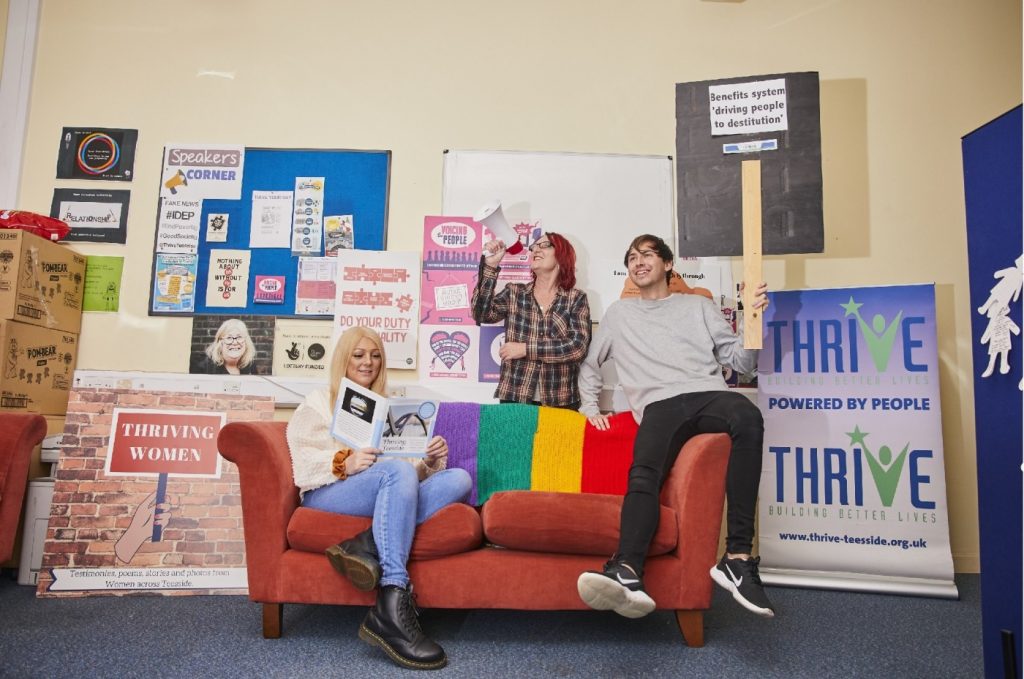
Three members of Thrive Teesside, including blog author Tracey Herrington
Three members of Thrive Teesside and Poverty2Solutions, including blog author Tracey Herrington, centre

It's never been more important to listen

At a time of high economic uncertainty, and with a government commitment to ‘levelling up’, there has never been a more important time for people with direct experiences of poverty to be involved in policy and decision-making, contributing their expertise and ideas for change. As Sue, a member of community group Dole Animators puts it:

‘Too often people are portrayed as numbers on paper, or as stats and percentages. It is very easy for policy makers to dismiss who they represent when they aren’t considered as individuals. Having someone describe their lived experience is not only brave but essential if we want positive and long-lasting change. They can show us our failings, our lack of compassion and humanity. If a policy affects someone why shouldn’t they have the right to be involved in its making?’

What we want to change

Poverty2Solutions, a coalition of three community groups (ATD Fourth World, Dole Animators and Thrive Teesside) led by people with direct experiences of poverty, want the UK government to commit to working with people with lived experiences of socio-economic disadvantage in policymaking processes and decision-making. Doing so would ensure that policies that have a direct impact on those in or at risk of poverty make a positive and effective contribution to stemming the rising tide of poverty and inequality. 

Despite the pledges of successive governments, rates of poverty and levels of inequality remain unacceptably high. Covid-19 has hardened and exposed these inequalities, strengthening the case for targeted and effective action.

If Government had listened sooner...

Experiences of the past 18 months show us that harnessing the expertise that comes with experience can lead to more targeted and effective policy responses. 

Whilst the government introduced a range of bold and compassionate policies at the start of the Covid-19 pandemic, had they engaged with people with lived experiences as the crisis developed, their response would have been better and more effective. 

For example, groups with experience very quickly flagged issues tied to digital exclusion and Free School Meal replacements. Had these groups been listened to and learned from, robust and practical responses could have been better developed that would have mitigated, at least in part, negative consequences that we have seen such as a widening educational attainment gap. Working in partnership with groups with lived experiences would have enabled the government to develop targeted policy responses in an efficient and timely manner, as opposed to taking the more knee-jerk and reactive response we’ve witnessed.

At Conservative Party Conference this week

Poverty2Solutions have been working together for almost five years to develop solutions to poverty that are grounded in our own expertise and experiences. We know what would make a difference in the communities that we live in; creating a fairer and more equal society and we want to be part of conversations about how we improve policies for all of us; we want to ‘build back better.’ 

The re-launch of our report, Do your duty for equality. Making the case for addressing rising levels of inequality in partnership with people with lived experiences of poverty will happen at the  Conservative Party Conference. Poverty2Solutions will be partnering with Bright Blue to host a fringe event: “Leaving no-one behind: the people’s voice in levelling up”

A real chance for transformation

Poverty2Solutions are a bit different from the usual policy wonks, journalists and parliamentarians that you typically find in attendance at the Conservative Party Conference. But we are attending and speaking up because we want to work with politicians to share our expertise and experiences, and to collaborate in exciting and innovative ways to create positive change.

The possibilities that can emerge by working directly with people with direct experiences of poverty and social security is genuinely transformative. I really hope politicians will listen, and grasp the opportunity we’re holding out to draw on the expertise in communities just like mine.

Charity and church leaders call for urgent action on rising poverty in the UK and around the world

New Year’s Honour for inspiring campaigner Penny

Meet our five new trustees

Feeding Britain & YLP: Raising dignity, hope & choice with households

Parkas, walking boots, and action for change: Sheffield’s urban poverty pilgrimage

Dreamers Who Do: North East event for Church Action on Poverty Sunday 2024

Autumn Statement: Stef & Church Action on Poverty’s response

Act On Poverty – a Lent programme about tackling UK and global poverty

How 11 people spoke truth to power in Sussex

Obituary: Michael Campbell-Johnston SJ

Annual review 2022-23

Ashleigh: “I think we will become known for making a change”

Cut-outs of Stef, Mary and Sydnie. Text above says: "Labour said they would put disabled people at the heart of everything they do. But instead they have shoved us to the very edges."

“The cuts are deeply immoral and should be opposed by all Christians”

SPARK newsletter summer 2025

Let's End Poverty logo: text in black, with a pink triangle logo

Let’s End Poverty: what comes next?

Growing crops & community amid the pandemic

In north Sheffield, dignity, agency and power are coming to the fore through food

For 11 years, the Parson Cross Initiative has played an important role in its community, coordinating various activities and support. For many years, it ran a weekly food bank session, but the pandemic prompted the change in approach that the team had long wanted. Nick Waterfield, who is pioneer minister in Parson Cross and who features on the October page of the 2021 Dignity, Agency, Power photo calendar, tells us more…

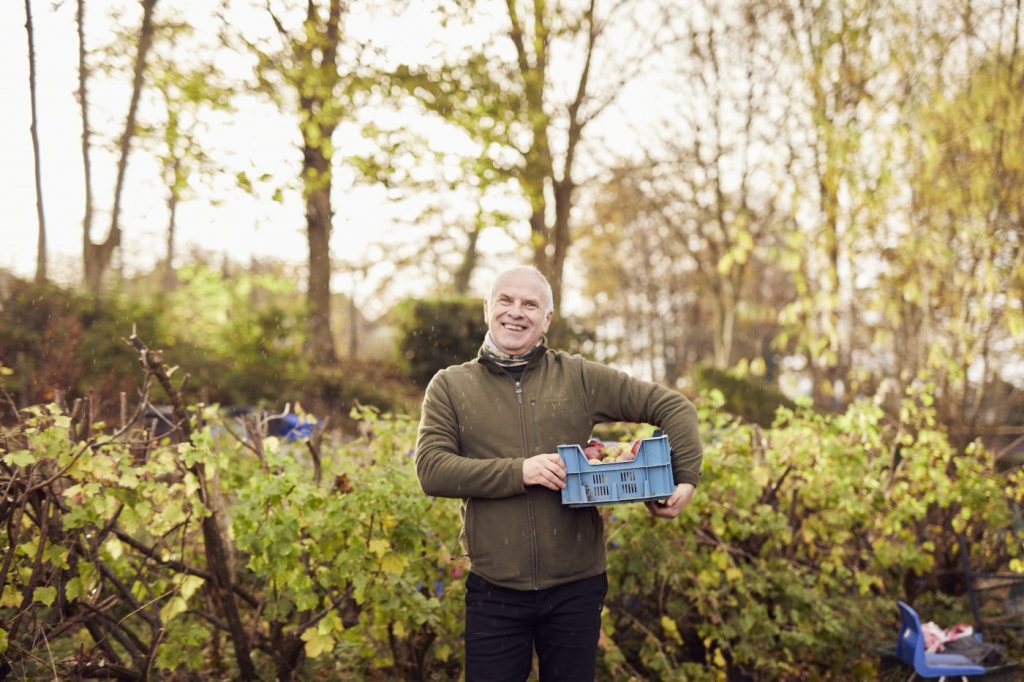
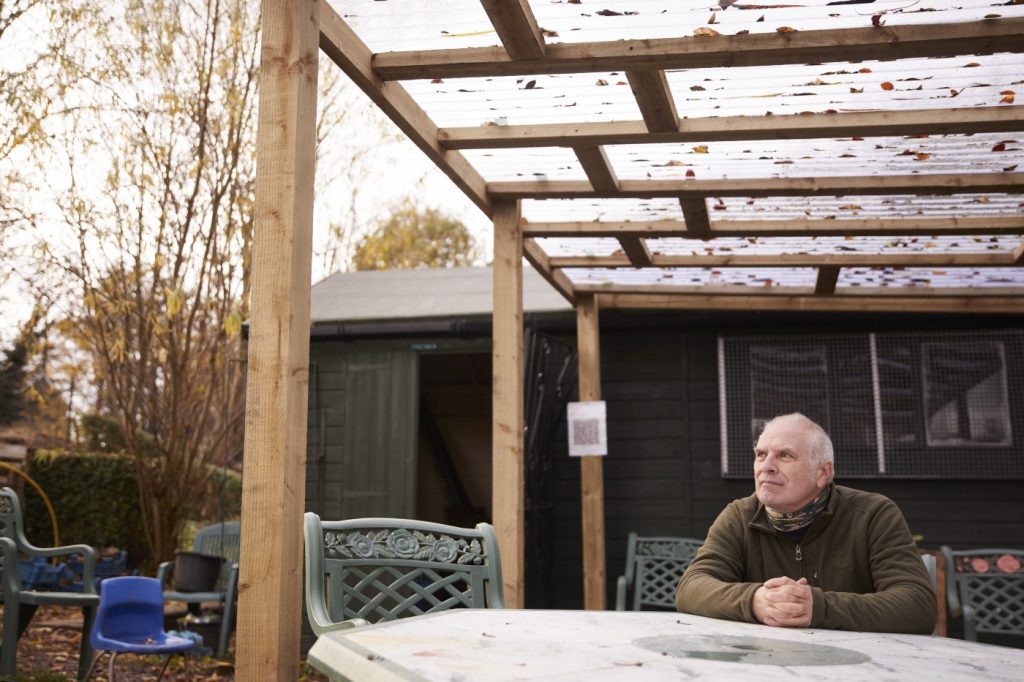
Nick Waterfield on the Parson Cross Initiative allotment. Photo by Madeleine Penfold.

What has changed since covid began?

One of the big changes is that we phased out our old food bank work. By January this year it had finished. That was all done to increase dignity, agency and power of local people. It was about shifting how we do food support.

We now do two things: we do a market and meals service, and a community hub with a social café. There are no referrals now, and people make a small financial donation if they can. 

We have a broader range of people using it now. For instance more people who didn’t necessarily need free food but who do benefit from some support are coming. 

Parson Cross in north Sheffield

Dignity, agency and power through food

Before, we were ringing around for donations of food but now we pay £20 a week to Fareshare and the food comes and people get to choose what they want. It gives a lot more choice and agency, and people can decide what they want and what they can give. It has been a momentous change from the old food bank approach.

There is more dignity now. In a food bank setting, you know why people have come and sometimes that’s the immediate context of a conversation. Now, it’s a more natural welcome, and it’s acknowledging that none of us has a right to know about other people’s private situation.

We never doubted that it was the right thing, to move away from the less dignified food bank approach, but one thing I did worry about was what might happen to some people who might stop coming. In fact, I am encouraged and amazed by how many people have kept coming back.

Dignity, agency and power through food

At the end of 2019, Nick had recorded this video with Church Action setting out his hopes for the 2020s as a whole, little knowing the pandemic was about to disrupt all our lives. 

Nick now says that upheaval has perhaps accelerated some of the change he talked about, reminding everyone of the value of community…

At the allotment, we have had opportunities to do new things. Indoor spaces were taken away from people in the pandemic but we have established new partnerships with other community groups. There’s a group here, Brown Girls With Drills, who we’ve been working with, and some young adults. It has given a whole new group of people access to the allotments.

It has all been about growing. Growing stuff and people and relationships, for want of a better phrase. It has been a major shift over the past year towards working in partnership and sharing space.

And what has happened is, the more and more people we have seen, the more and more stories we have heard of personal and community strength and resilience. Our services weren’t there for a while, but people were still supporting one another and looking out for one another.

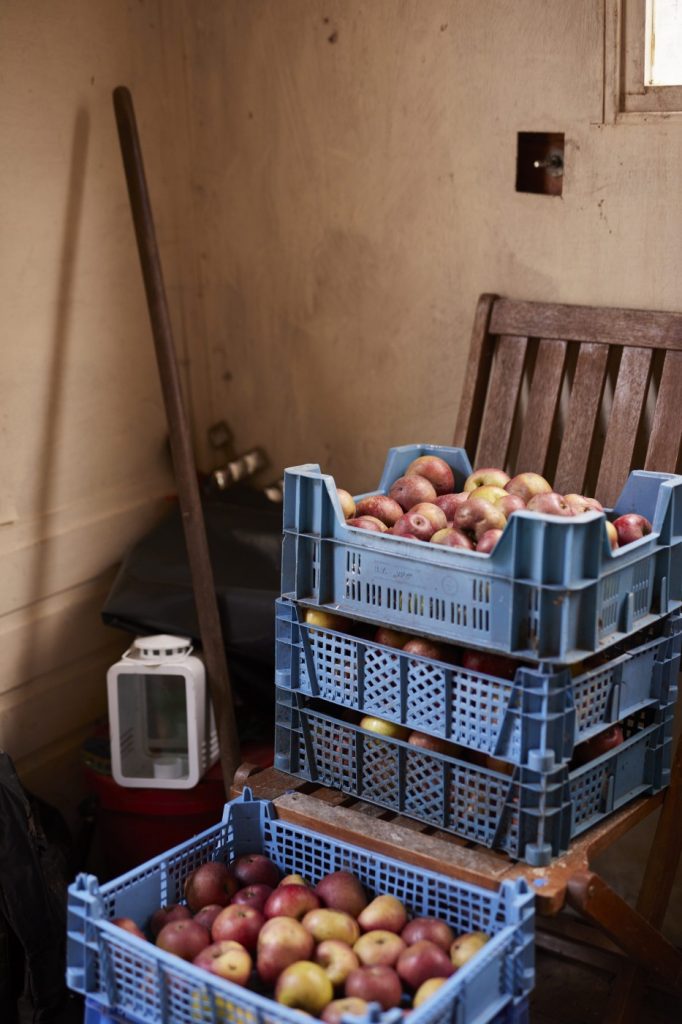
Above: Nick Waterfield on the Parson Cross Initiative allotment. Below: A harvest of apples from the plot. Both photos by Madeleine Penfold.

Sharing space, sharing power

That’s where power can come from. You cannot develop community power without a sense of belonging. Only then can you talk about values and hopes and dreams, which is where shared power develops. 

At the allotment now, we have more young people talking with older people who they would not have been talking with before, and all the groups are recognising that the others have rights in the same space. 

These are small shifts in power in a community, at micro levels. Ultimately, you give power by listening to and valuing someone and their story and that comes from connecting.

Dignity, Agency, Power and human worth

Pilgrimage on the Margins in Sheffield

150 new Pantries to open: All your questions answered…

Food, friends & a future: SRGs are a recipe for success

Church Action on Poverty and Co-op team up to open 150 new Your Local Pantries

#ChallengePoverty Week Book Launch

Sheffield’s Poor Need their own Commission and Bigger Slice of the Pie

Speaking Truth to Power in Pantries

Catholic Social Teaching and human dignity

How to unlock poverty for families like Carlie’s

3 ways church leaders can truly transform poverty discussions

SPARK newsletter autumn 2022

A new partnership to support communities

Letter to the Prime Minister: more cost of living support is urgently needed

Church Action on Poverty 40th Anniversary Pilgrimage and Conference in Sheffield

Cost of living crisis: is compassion enough?

Politics, self and drama in our responses to scripture

Dignity, Agency, Power: review by John Vincent

Cut-outs of Stef, Mary and Sydnie. Text above says: "Labour said they would put disabled people at the heart of everything they do. But instead they have shoved us to the very edges."

“The cuts are deeply immoral and should be opposed by all Christians”

SPARK newsletter summer 2025

Let's End Poverty logo: text in black, with a pink triangle logo

Let’s End Poverty: what comes next?

Seeking food justice in York

It’s not enough to hand out food, if the broken systems are allowed to continue.

Two people who know that well are Mary Passeri and Sydnie Corley, co-chairs of York Food Justice Alliance and tenacious campaigners against the causes of poverty.

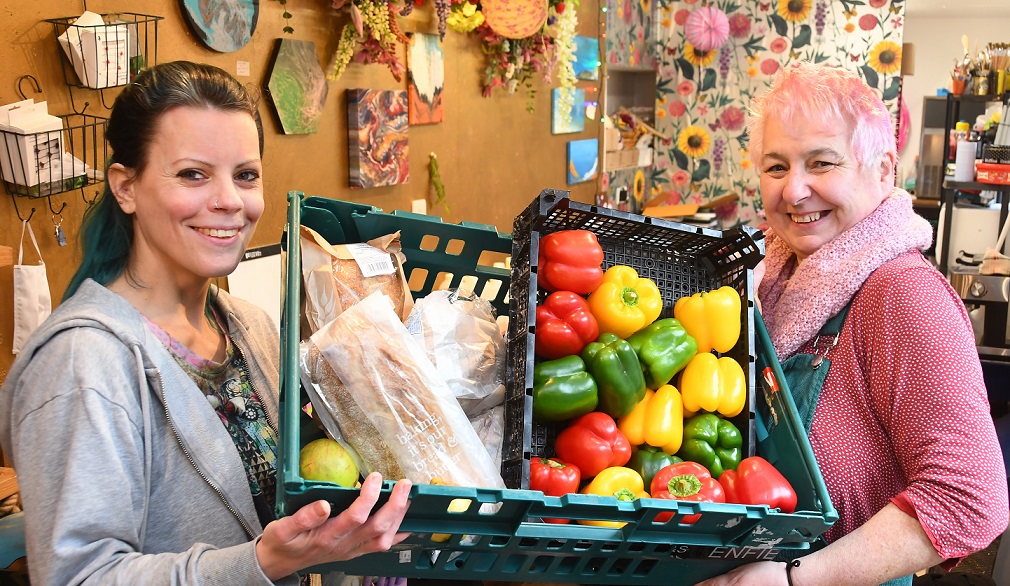
York artists Sydnie Corley and Mary Passeri, who run the York Food Justice Alliance at SPARK in Piccadilly, York. Picture by David Harrison.
Sydnie Corley and Mary Passeri, co-chairs of the York Food Justice Alliance. The duo are both artists, and are pictured in their old studio. Photo by David Harrison.

Mary and Sydnie feature on the September page of our 2021 Dignity, Agency, Power calendar, in recognition of the work they do across York and beyond.

Before covid, the alliance existed to coordinate all the different food aid projects around York and to speak up about what was causing hunger in the first place. A report was sent to the city council and Mary and Sydnie joined in others in producing this short film, focusing on hunger in the school holidays:

The duo also ran their own project, a zero-waste food stall, which helped many people get by day-to-day. But they both believe passionately in the need for a long-term focus. “We need to look for an exit strategy,” says Sydnie. “We need to look at how we can end the need for having food banks.”

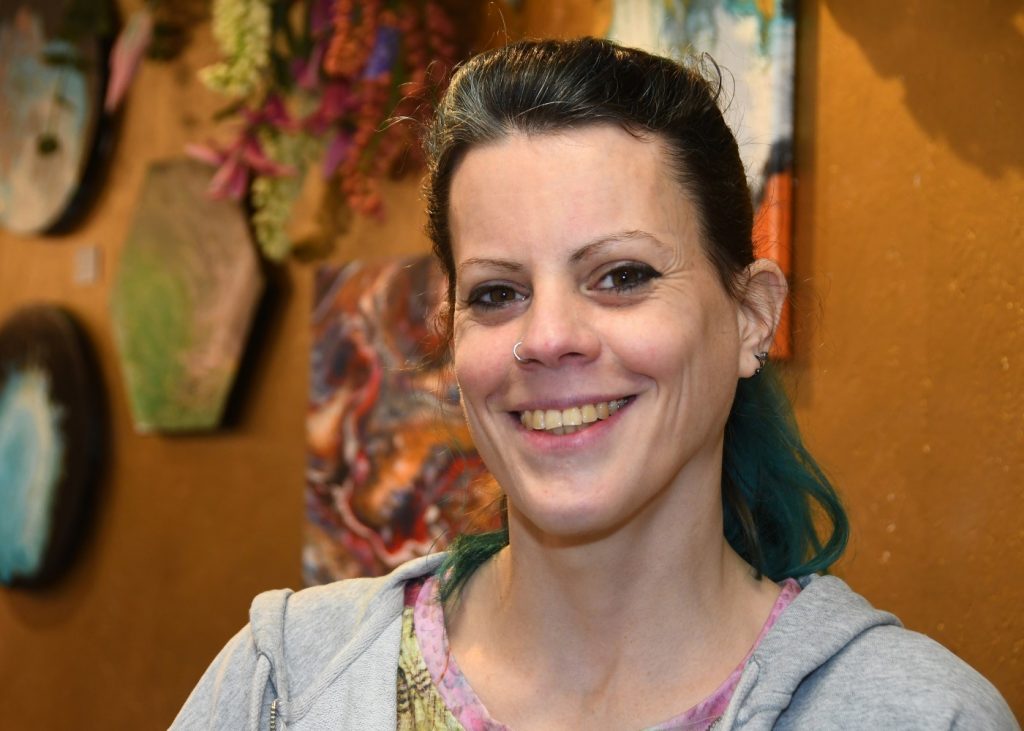
Sydnie Corley, co-chair of York Food Justice Alliance. Photo by David Harrison.

Speaking up and sharing insights

To that end, they have spoken up in local and national media, sharing their insights on Radio York, BBC 5 Live, the Six O’Clock News on TV, and in The Yorkshire Post. 

They also helped to write the 2020 Reporting Poverty guide and addressed a room full of journalists, on the need for more first-hand and less stigmatising journalism.

Mary said then: “We’ve done media work because we want to challenge preconceptions. People have ideas about single parents or people on disability benefits or whatever, and we wanted to challenge the stigma and stereotypes.”

Mary Passeri, co-chair of York Food Justice Alliance. Photo by David Harrison.

Vision of a better society

This year, they have also been involved in the Covid Realities initiative, and the Food Experiences During Covid-19 research project, both of which aim to help ensure lasting change, as the country rebuilds after covid. 

People with experience of poverty know better than anyone what needs to change, and why. Those are the voices that must be heard most loudly.

More 2021 Dignity, Agency, Power stories

Photos & quotes: the energy, hope & resolve of Dignity For All 2023

It’s like they’ve flown: the awesome power of craft & companionship

An Introduction to the Joint Public Issues Team

Addressing poverty with lived experience: the APLE Collective

Fair fares in the North East, thanks to students!

Mary: tackling poverty via radio, art and a newfound resolve

Poems from the Iona Community 2022

SPARK newsletter summer 2023

Church Action on Poverty in Sheffield 2023 AGM

An introduction to Self-Reliant Groups for Churches

How the Pope’s words 10 years ago challenge & changed us

Budget 2023: Speaking Truth To Power reaction

Budget 2023: a precious chance to bridge the rich-poor divide

Books about poverty: some recommendations for World Book Day

Dark Holy Ground – autobiography of a Church Action on Poverty campaigner

Cut-outs of Stef, Mary and Sydnie. Text above says: "Labour said they would put disabled people at the heart of everything they do. But instead they have shoved us to the very edges."

“The cuts are deeply immoral and should be opposed by all Christians”

SPARK newsletter summer 2025

Let's End Poverty logo: text in black, with a pink triangle logo

Let’s End Poverty: what comes next?

Jayne and Shaun’s story: creativity, self-reliance and truth

Jayne and Shaun have worked with Church Action on Poverty on Poverty Truth Commissions, Self-Reliant Groups, and creative workshops. Watch their story below.

Find out more about the projects Jayne and Shaun have been part of below:

Sharing Power to Shape Mission

Activists work to shape policies of the future

Are churches losing faith in low-income communities?

Church Action On Poverty North East 2025 AGM

Cut-outs of Stef, Mary and Sydnie. Text above says: "Labour said they would put disabled people at the heart of everything they do. But instead they have shoved us to the very edges."

“The cuts are deeply immoral and should be opposed by all Christians”

SPARK newsletter summer 2025

Let's End Poverty logo: text in black, with a pink triangle logo

Let’s End Poverty: what comes next?

“You are worthy. Don’t ever give up.”

Monica Gregory, who works with homeless people in Oxford, has been speaking out as part of our Food Power programme. We talked to her about the importance of dignity, agency and power.

Monica works with Good Food Oxford, one of the local food poverty alliances involved from early on in Food Power. She found confidence through speaking out alongside other people in Food Power, highlighting the poverty that exists in Oxford but is often not acknowledged.

“It doesn’t matter what people think of you, you know, as long as you believe in yourself and you love yourself. Just look in the mirror and tell yourself that you know that you love yourself and that you are worthy. Don’t ever give up.”

Sharing Power to Shape Mission

Activists work to shape policies of the future

Are churches losing faith in low-income communities?

Church Action On Poverty North East 2025 AGM

Cut-outs of Stef, Mary and Sydnie. Text above says: "Labour said they would put disabled people at the heart of everything they do. But instead they have shoved us to the very edges."

“The cuts are deeply immoral and should be opposed by all Christians”

SPARK newsletter summer 2025

Let's End Poverty logo: text in black, with a pink triangle logo

Let’s End Poverty: what comes next?

How we can use poetry to accelerate social change

Poet Matt Sowerby harnesses the power and resolve of people in poverty.

Matt started using his skills as a route to social justice, when he became involved in the End Hunger UK campaign. From there, he hasn’t looked back. 

In 2020, he became poet in digital residence at Church Action on Poverty, and worked with fantastic campaigners around the country to produce Same Boat? a powerful anthology of poems based upon poverty and the pandemic. 

Poetry as a force for good

Church Action on Poverty supporters might recognise Matt, as he is the July feature in the 2021 Dignity, Agency, Power calendar. This week, Matt and our Food Power officer, Ben Pearson, caught up on Zoom, and you can listen to the conversation on our latest podcast here:

Poetry can make the world a better place

In the podcast, Matt tells how and why he became involved in social justice movements. 

He tells listeners: “I’m really interested in the way that poetry can be activism and poetry can make the world a better place. I think especially in this sector, there are some things that are so unjust you feel you need to do something about it.”

He says: “There’s a very thin line between making something, and making a change, so I think it does teach us something about our agency and the ways we can make a difference in the world, the more we engage in the arts.”

Matt talks about the number of people who became creative at the start of the pandemic, turning to the arts as a vital response to the crisis. He talks also of poetry as having the power to fossilise the feelings of a particular moment, and he and Ben talk of the empowering force of the Same Boat? anthology. 

Matt says: “The feedback I got was that it did mean so much to so many people, to engage in the process but also to be able to say ‘I am a published poet’ at the end of that and to know that for the rest of their lives, that that is part of who they are.”


  • All photos in this article are by Madeleine Penfold.

Other 2021 calendar stories:
Dignity, Agency and Power

19 new Pantries are reaching thousands of people

78 pics: Pantry members get creative to end poverty

Dreams & Realities: reflections on an amazing tour

“The PTC is one of the best things that’s ever happened to us”

Annual review 2023-24

Sheffield MP speaks at Pilgrimage event about tackling poverty

Cut-outs of Stef, Mary and Sydnie. Text above says: "Labour said they would put disabled people at the heart of everything they do. But instead they have shoved us to the very edges."

“The cuts are deeply immoral and should be opposed by all Christians”

SPARK newsletter summer 2025

Let's End Poverty logo: text in black, with a pink triangle logo

Let’s End Poverty: what comes next?

Activism, struggle and superpowers

Scouse writer-actor Ellis Howard has worked with us over the past year, helping people channel their experiences of poverty and struggle into powerful activism. In this new video, Ellis explains why telling your own story is like having a superpower.

Transforming lived experience into activism

My name is Ellis Howard. I  am a Scouse actor-writer.  With Church Action on Poverty, I ran a series of workshops all about how we can use our lived  experiences and transform them to activism; how we can own our stories of struggle, of  food shortages, to empower us and to help shape future policy and future lives.  

Celebrating unheard stories

For so long these stories, these experiences, these lives have been completely undocumented.  They haven’t been celebrated in a glorious nuanced way. 

Harness your superpower

Get in touch with all of those things that make you unique, and absolutely harness them, because that’s where your superpower lies.

Volunteers needed!

Urgent: Ask your church to display this poster on Sunday

The town of 250,000 that revolutionised its food system

Say no to these immoral cuts, built on weasel words and spin

Dreams and Realities in our context

Cut-outs of Stef, Mary and Sydnie. Text above says: "Labour said they would put disabled people at the heart of everything they do. But instead they have shoved us to the very edges."

“The cuts are deeply immoral and should be opposed by all Christians”

SPARK newsletter summer 2025

Let's End Poverty logo: text in black, with a pink triangle logo

Let’s End Poverty: what comes next?

62% want action on income inequality. So, what do we do?

We look at three ways the UK can begin building the society it wants by tackling inequality.

How do we make sure everyone is included in the UK’s pandemic recovery?

How do we ensure the injustices and inequalities exposed and exacerbated by covid are not made worse still when the country gets going again?

There has been much talk of roadmaps in the past few months, but let’s also talk about destinations. Where do we want to go as a country – and how to get there? We can’t have a recovery where some speed off down the road, while others are left behind on the hard shoulder. We need to address inequality.

And, before we set off, we need to make sure all the systems we rely on are roadworthy.

Where do we want to go?

Covid has caused us to reassess our priorities as a country. We have been reminded of the importance of community, the value of neighbours, and the extent to which we all rely on one another.

There are signs also that many of us want to see a more just society, with less inequality. Polling data has shown that 62% of us think the Government should take measures to reduce differences in income levels, while only 12% disagree.

What might action look like? 

There is much work to be done in the UK to narrow the many gaps between those of us who are economically privileged and those of us who are not. This blog looks at just three potential steps: one simple and immediate policy decision, one medium term strategy, and one profound long-term change, all of which would help to reduce inequality.

1 - Protect Universal Credit

43% of Universal Credit claimants experienced food insecurity

Millions more people have been receiving Universal Credit in the past year, as a result of the economic upheaval caused by covid. It is not a great system. The security it provides is flimsy and volatile, and frequently insufficient.

Data released this year showed that people on Universal Credit were eight times as likely as the national average to be food insecure.

Universal Credit should be increased, but instead the Government is planning a cut. It intends to reduce weekly payments by £20 a year from the autumn, which would reduce many struggling people’s incomes by £1,000 a year. That would increase inequality rather than reducing it. We should all be included in the post-covid recovery, but that won’t happen if the Government leaves people without enough fuel in the tank. 

The public want the Government to reduce income inequalities. It should start by abandoning this cut, and keeping the Universal Credit lifeline.

2 - Carry out an MOT on the benefits system

Protecting Universal Credit is a vital first step, but we need to go further. The benefit system needs to be made roadworthy. Just like other vital public services, it needs to be invested in and kept up to date, so it is fit for purpose when needed.

A fair assessment of our benefits system would likely reveal that it does not generally meet the cost of living, and that it is too detached from the people it is meant to support. Payments undoubtedly need to be increased and reviewed annually to ensure they keep pace with living costs. 

More fundamentally, the DWP needs to change the way it works, to ensure the system is designed in conjunction with people who have used the system. Groups such as Poverty2Solutions and the APLE collective (Addressing Poverty Through Lived Experience) have shown how systems and services can be enhanced when people work together. We can’t hope to narrow inequalities in the UK if the primary support system is sub-standard.

3 - Address the UK's underlying power imbalances

There is a more fundamental reassessment that we all need to take part in, which is to address the underlying power inequalities in our society. Only if we do that will other inequalities ever be resolved.

There are inequalities in the UK, around gender, race, region, class and sexuality. Each of these linked injustices harm individuals and hurt society as a whole. Inequality violates people’s dignity and curtails their opportunities, meaning countless dreams and possibilities go unrealised, meaning the whole society always falls short of what it could be and do.

None of these inequalities is new. They may even feel entrenched, but they are not inevitable and they can be addressed. 

All of them stem from an unjust distribution of power, which allows inequalities to perpetuate. We need to break the cycle by truly challenging where power lies and why, by speaking up loudly against systems that allow injustice and inequality to continue, and promoting work that redistributes power.

Initiatives such as participatory budgeting and Poverty Truth Commissions have shown what can happen when communities are entrusted with decisions, and when people meet as equals to find solutions. Such work needs to be supported, encouraged and accelerated if we are to make lasting changes to inequality.

How 11 people spoke truth to power in Sussex

Obituary: Michael Campbell-Johnston SJ

Annual review 2022-23

Ashleigh: “I think we will become known for making a change”

North East churches & community gather to tackle poverty together

There’s huge public desire to end poverty – will politicians now act?

What is Let’s End Poverty – and how can you get involved?

Our partner APLE is looking for new trustees

Nottingham’s first Your Local Pantry opens

SPARK newsletter autumn 2023

Urban Poverty Pilgrimage: Towards a Theological Practice

MPs praise the Pantry approach – but they must do so much more

“We can make a change. That’s why we’re here.”

Cut-outs of Stef, Mary and Sydnie. Text above says: "Labour said they would put disabled people at the heart of everything they do. But instead they have shoved us to the very edges."

“The cuts are deeply immoral and should be opposed by all Christians”

SPARK newsletter summer 2025

Let's End Poverty logo: text in black, with a pink triangle logo

Let’s End Poverty: what comes next?

Wayne’s story: Why I (and you) must refuse to be invisible

“We all want a better world. We have the money, we have the expertise, we have the technologies. It’s just political will.”

Wayne Green from Hear My Story in Worthing

Those are the words of Wayne Green (pictured above) who has been striving to improve society for more than 25 years. 

He was first moved to act by his own experience of eviction, poverty and injustice, but he has gone on to take part in many powerful campaigns locally and nationally. 

And he keeps going still today.

Wayne was the June feature in Church Action on Poverty’s 2021 Dignity, Agency, Power calendar. We asked him to talk about some of the work he has been involved in, but also to outline his own path to campaigning, his inspiration to keep going, and the lessons he would share with younger campaigners seeking to make society better.

Wayne: why I started campaigning

I got involved because I had two young children. At that time, I had been made unemployed as a young man, my wife had just given birth and we were renting a flat in Worthing and when the baby was three months old we were evicted.

I was shocked because I came from a middle class background and I had never experienced anything like this before. Here I was with my wife and three-month-old baby with no work, nowhere to go, nowhere to live and I was shocked.

I put my baby in a cardboard box, wrapped up in a woollen cot sheet and we went in the back of a garage van at 9 o’clock at night and drove for 12 hours to Cornwall to live with my mother in law.

I was really angry. I was told at local authority ‘sorry, can’t help you’. That was it. I thought ‘oh my gosh, what do I do?!’

Later we moved back and ended up in Shoreham an as we moved in to this new flat we managed to rent. 

This woman over the road saw us and almost adopted us. Jocelyn Underwood. She was an inspiration to me and a guiding light to me on the issue of social exclusion and poverty and the work of the church, and justice and peace, and also the issues of good local people and what can be achieved.

She basically said to me: you can do anything, and always challenge the system. She was very inspirational and she brought together a group of church goers at our local church. St Mary de Haura.

She was so giving as well but above all her connections were unbelievable within justice and peace groups locally and the church and she was eloquent, she could out-talk any politician.

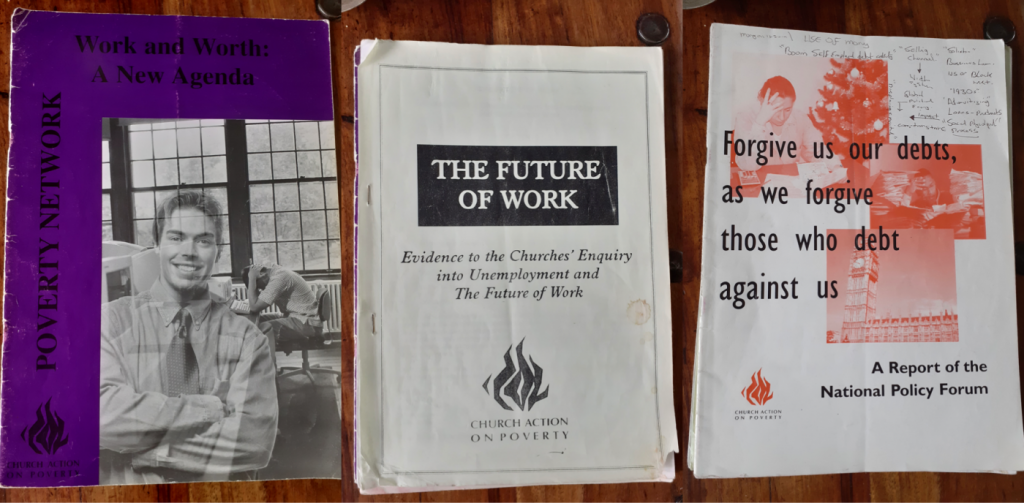
Some of the reports Wayne has contributed to

Starting to speak up

I spoke at the first National Poverty Hearing. That was quite an interesting and really giant move, not just for myself but local society and national society. I think that’s something that did change society very deeply.

We started a group called Adur: Local People National Voice and we put together our first ever poverty hearing in the local area and we attracted 300 local people. Our local MP didn’t turn up but other local politicians did and Church Action on Poverty came down and gave us full support.

It was interesting to turn the dynamics round. Here we were, a group of six of us on a panel who were in poverty, unemployed, speaking to our local decision makers and local population, and that was new.

At the Hearing, Wayne described poverty as “a battle of invisibility and being blamed for society’s problems.”

That’s how I felt it and that’s how I still see it. It’s exactly what’s happening today. The experience of being part of a poverty hearing, going up and speaking to 600 leaders was quite frightening but the process leading up to it was quite empowering. It broke a lot of barriers. Being poor in the south is still going without food, as you would in the north. There’s a lot of similarities that broke down barriers.

We had a really good core group of people around us who would nurture us as well. and we found that was good and gave us access to a huge amount of people you’d never believe, like politicians, church leaders. I used to pinch myself, saying ‘Am I meeting these people, are they actually listening to me? You couldn’t believe it in some sense. We call it imposter syndrome now.

The Houses of Parliament

What happened next?

Wayne helped to organise a further local poverty hearing in Worthing, and after some persuading Sir Peter Bottomley MP attended.

He came to the meeting but I think it shocked him, the level of interest at that meeting.

The National Poverty Hearing itself, to my mind, unified the conscience of the country. It pricked the conscience and said ‘here we are’. We were opposite the House of Lords, the Houses of Parliament and we were saying ‘come over and speak to us’. Unfortunately, the leaders of the parties didn’t come but other politicians did. I remember in the afternoon a massive argument started in Parliament and I thought ‘at last, we’re having a proper debate’, which was good. It was quite empowering.

Next up was the Future Of Work report, which influenced the thinking of many politicians, including Gordon Brown when he was the incoming Labour chancellor in the 1990s.

I have a copy of that report here and I still read it today and that was very, very interesting to get involved in. You actually felt you had something really to say and people were prepared to listen and we were part of this policy group that went across the nation and brought people together and we covered everything you cover today. I was just reading the issue of flexibility. Flexibility for who? This was 20 years ago and there’s a woman in this report and she talks about flexibility with no contracts. 20 years ago!

Networks of support are vital

Those with first-hand experience through Church Action on Poverty were encouraged to meet once a month or once a quarter, and put our findings together of our experiences of policy. And we covered all the areas of the benefit system, the welfare system, we covered all the areas of work, housing, tax, food, living, but most importantly how society sees you at the local level and national level.

That’s where I said what I still say today: poverty is a battle of invisibility. It’s not being seen and if those in power do see you, they will see you but not let you join in on the actual policies themselves.

Speaking truth to power

Speaking “truth to power” and having agency as an actor can be difficult and can be very challenging. But at the same time, you are speaking to human beings, and human beings do have the capacity to change.

My experience over the 25 years is if I was to put all those reports together, you would see there have been some dynamic changes, such as understanding of mental health issues, understanding the importance of policy, but what we are actually seeing is a harsher world to live in if you are poor.

For example, Hear My Story is working towards a Poverty Truth Commission. You’re seeing community trying to do more themselves, but we had quite a lot of resistance that I was quite shocked about.

What has kept you going?

If I go back into my personal life… I was adopted, I also have Black African-Caribbean ancestors who were slaves. I think there’s a genetic resistance in me; I want to see a better world. I care about the world.

I’m not a truly religious Sunday person, but I believe all faiths have a golden thread running through them and I believe it is possible to change society and one must keep going on this issue.

I also get inspiration from other people. Young people give me more inspiration today. How is it that I see so many older people saying ‘ohh, what’s to be done in the world?’ and you’ve got young people ride up saying, ‘I’ve had enough’.

Church towers in York
Wayne has worked with the church over the years and says it is a fundamental pillar of change

What do you see as the church's role?

Jesus was a radical. He was on the outside and he saw change. Not only that, if you look at other issues of the church, its roots are deeper than politics in the community. I find the church an area that does actually listen to you. If you talk to a local vicar, you’ll probably find they’re very academic people, quite willing to listen. 

I’ve been critical of the church, saying it’s become too middle class and feels too safe, and won’t want to go on the radical side of life but it’s slowly having to because of our morals and ethics. For me the church is a fundamental pillar for change.

Lastly Wayne... what do you say to newer campaigners?

First and foremost, your experience is proof that you exist. Secondly, you are equal to anyone else and your knowledge is probably more than the person you talk to who wants to know. Thirdly, I’d say to young people, don’t ever give up on a cause, because that’s what they want you to do, to walk away. Don’t. Be a thorn in their side. Rock that boat. Be a troublemaker! Troublemakers help change.

Believe in yourself. The experience you have is unique to you. Poverty is a battle of invisibility and you must be seen. Demand to be seen. And don’t ask for the lowest. Why should we ask for the lowest? We want the best out of our society. And everyone should have the best.

Why do I work with Church Action on Poverty after all these years? What I have benefited from is seeing change within systems and structures that others don’t see.

The support mechanisms are very important as well. People do care and having that sisterhood or brotherhood matters. You’re all different but have all experienced the pain, the hurt, the disillusionment, the exclusion of being outside society. But also, if you work hard all together, change can occur. It has to.

“We all want a better world. We have the money, we have the expertise, we have the technologies. It’s just political will.”

Listen to the podcast:

Other 2021 calendar stories:
Dignity, Agency and Power

Jayne and Shaun’s story: creativity, self-reliance and truth

Sign the Anti-Poverty Charter!

The story of a Cornish food and community revolution

“You are worthy. Don’t ever give up.”

How can policy-makers and churches work together to tackle UK poverty?

How have Christians responded to poverty during austerity?

Navigating Storms

Reset The Debt in Parliament

Watch the Food Power story

How we can use poetry to accelerate social change

Activism, struggle and superpowers

Why does digital exclusion matter?

62% want action on income inequality. So, what do we do?

SPARK newsletter, summer 2021

Building Dignity, Agency and Power Together

Penny: What I’ve learnt as an anti-poverty activist

Sheffield Church Action on Poverty Update, May 2021

Listening…

How should we talk about poverty in the 2020s?

What’s the best way to reduce the stigma of food poverty?

Food insecurity: now we have the data, it’s time to act

Hold the moment

Why did I write Second Class Citizens and what can we learn?

David Goodbourn Lecture 2021 – register now

A week that changed everything….

‘Life on the Breadline’ announces their End of Project Conference, 24-25th June 2021

Cut-outs of Stef, Mary and Sydnie. Text above says: "Labour said they would put disabled people at the heart of everything they do. But instead they have shoved us to the very edges."

“The cuts are deeply immoral and should be opposed by all Christians”

SPARK newsletter summer 2025

Let's End Poverty logo: text in black, with a pink triangle logo

Let’s End Poverty: what comes next?