
fbpx

Nick Jowett, a member of Church on Action on Poverty in Sheffield, writes on differing Christian approaches to tackling poverty.

It would be right to assume that all Christians are equally concerned about issues of poverty and inequality in society.

The Bible is full of such concerns. The law of Jubilee in Leviticus 25 is intended to prevent anyone accumulating more and more wealth and property. The prophets inveigh against greed and luxury and the unfair treatment of the poor. Proverbs 14:31 says: ‘Whoever oppresses the poor insults his maker, but he who is generous to the needy honours him.’ In the New Testament Gospels one can quote very many passages in which Jesus shows his preferential concern for the poor and warnings against those who amass wealth. ‘The love of money is the root of all kinds of evil,’ says the writer of 1 Timothy (6:10). The church of Acts 4 held all things in common, so that there was no inequality.

So the Bible is very clear that injustice and poverty are a scandal and an offence to God. Those who promote inequality, those who pile up wealth for themselves, those who live in luxury while others suffer and fail to do anything, those who actively cheat the poor – these will have to face the harsh judgement of God. Those who help the poor and suffering people, those who give up their wealth and follow in Jesus’ way, those who sell their property and share it with the community – these will be blessed, because they have sought to bring God’s kingdom into reality

Throughout Christian history, the church has been involved in the promotion of charity towards the poor and vulnerable, following Jesus’ commands, e.g. in the parable of the sheep and the goats (Matthew 25) or that of the Good Samaritan (Luke 10). This has involved both the recommendation of a life of generosity and/or chosen poverty for individual Christians and the organisation of communal charitable activity to help the less fortunate. But the arrival of the modern state, with its economic power and its assumed responsibility for the well-being of its citizens, has opened up new questions which the Bible and Christian traditions may or may not be well equipped to answer.

In the United Kingdom and following upon the consequences of the industrial revolution, it was at the beginning of the 20th century that the state caught up with its responsibility for the nutrition, health, education, employment and housing of its citizens. This gradually removed from the church much of its charitable provision of the same things, pushing church and other charitable activities to a voluntary and more marginal sector. It is clear that charitable provision on its own had been unable to meet the needs of the population.

Following the economic crisis of 2008, Conservative governments have reduced tax-funded community facilities and individual welfare support to a considerable degree, with a renewed hope, not always fulfilled, that private and voluntary provision might fill the gaps.

Christians on the Left are very likely, in addition to Scripture and Christian tradition, to take their point of departure from William Temple’s ‘Christianity and Social Order’ and the creation of the welfare state in the post-war Labour government. By contrast, Conservative Christians may well consider themselves ‘less political’, relying on Bible and Christian tradition alone, but still accepting the necessity of the welfare state, while also being ‘children of Thatcher’ in preferring the freedoms and possibilities of personal/economic initiative in today’s society.

Left-wing Christians will speak a good deal about the kingdom of God, which has both come into being in the ministry of Christ and yet is still to be fulfilled by the end of the age, and they see an important role for humans, and especially Christians, in collaboration with God’s Spirit, in bringing to fruition a just and peaceful earth. But socialist Christians have to face a major challenge: the modern state, with its democratic accountability and economic strength – with power to affect the whole life of its citizens – is very different from the societies in which Christianity appeared and grew: how then can a set of ethical injunctions which grew up in a world where inequality and injustice were either unquestioned or matters for individual responsibility or, at most, for those with power over smaller social groupings, be applied to the modern corporate state?

Their answer would be twofold. Firstly, they would point to the effects of ‘structural sin’, that is the accumulated effect in society of millions of selfish decisions and actions which entrenches huge disparities of wealth and power, rewarding those who come out on top with ever more privileges and insulation from the less fortunate, and at the same time pushing down those whose forebears came from below or lost out in an earlier rat-race, so that they exist in a ghettoised underclass with low paid, boring jobs, poor quality housing and food, education which often does not encourage aspiration, and physical and mental health substantially worse (as measured, for example, by life expectancy) than for better-off echelons of society.

The accumulated genetic outcome of this process is little commented on, but, for those who have been poor for generations, and probably getting poorer, the quality of minds and bodies will almost certainly decline, often to the point at which all efforts to encourage educational progress and feelings of self-worth and initiative may be very difficult or even feel impossible. (I don’t believe they are impossible, but the resources required are well beyond what any political party has shown itself to have the will to provide.)

Our left-leaning Christians will point to the structural sin which has embedded deep chasms of inequality in our society and left a whole section of it almost cut adrift from the rest, people for whose multi-deprivations there are no quick-fix solutions. They will, however, point to the fact that Liberal and Labour governments in the 20th and 21st centuries did make deep inroads into this great divide, with major provisions, through tax and national insurance, of housing, education, the NHS etc, and that Conservative governments have actually accepted the necessity of these provisions. The Left will point out also that Conservative governments have tended to fall back into a ‘freer’ version of society, with many profit-seeking private firms now occupied in social provision, and have allowed processes of division and inequality to become re-embedded.

So state provision is seen by left-leaning Christians as simply a modern method, appropriate to the modern state, of fulfilling God’s command to care for the poor. It’s quite clear that personal or communal charity, valuable though it is, still leaves much of the inequalities and deep unfairness of society untouched, and so, if this is to change, it is only the state that can achieve the heavy lifting that is required. (Many would argue that charity actually confirms and deepens the ‘us and them’ of divided societies: the rich get a nice feeling for handing down just a little of their wealth, but still hold on to most of it; the poor feel humiliated but don’t ever get enough to change their position. Result: nothing changes.)

Secondly, even though modern society is so different from earlier societies, left-wing Christians can point to Biblical justification for state provision. When Jesus was challenged about the payment of tax, he is reported as saying, ‘Pay Caesar what belongs to Caesar’. In Romans 13 Paul also recommends that Christians should willingly pay their taxes. The reason Paul gives for this is that the Roman state provided a system of order and justice and security, and that overarching provision was what one’s taxes were helping to fund. The modern state, of course, provides much more than basic law and order, but the principle of taxation to provide a public good is the same, and therefore tax-funded state provision for the poor can be seen as in line with Christian values.

It might even be possible to argue that Jesus feeding five thousand people at one go is an argument for the state providing a Universal Basic Income for its people.

So what will right-wing Christians say in answer to this?

Of course they will accept the Biblical and later Christian teaching about the evils of mere wealth accumulation and the requirement of charity towards the poor and vulnerable. They will, however, place greater emphasis on personal, individual responsibility: those who are at the bottom of the pile need to be encouraged and stimulated to find a way of bettering themselves, without being featherbedded by state hand-outs which may destroy the motivation to improve their lives; those who are better off should be willing to help the less fortunate, both by generosity and by community and charitable involvement.

There are some issues the right-wing Christians need to face. It is possible that their nerve of effort may be somewhat weakened by making too much of Jesus’ dictum that ‘you will always have the poor among you’ (Matthew 26.11; Mark 14.7; John 12.8; and see Deuteronomy 15.11), even if that particular text is less a universal announcement, and more a defence of a woman’s extravagant generosity towards him (‘You complainers will have plenty more opportunities to help the poor, if that’s what you’re so bothered about!’). Another factor for evangelical Christians which may detract from energy directed towards the ending of poverty is their focus on individual salvation and on a final cosmic consummation, which will be entirely in the hands of God and allow much to fall to perdition; so their efforts are on conversion of individuals, rather than on an incremental collaboration with God to bring in the kingdom on earth. (Having said that, I must add that in the UK in the last twenty or thirty years evangelical Christians have often been in the forefront of imaginative projects with and for the poorer parts of society.)

But in relation to the poor, Conservative Christians are very likely to believe that decades of welfare provision by successive governments have created a culture of dependency, in which too many of the recipients, whether simply receiving what was due to them or positively gaming the system, have got stuck in a poor quality lifestyle, in which it isn’t really worth taking a job, and so you get generation after generation of people with low aspirations and a failure to contribute positively to society. Conservative Christians may well believe that welfare systems have weakened families by encouraging sexual activity and births outside secure relationships and allowing men to escape the responsibilities of fatherhood. So recent Conservative government approaches to poverty have used the need for national austerity as a reason for making welfare benefits and other social provision less generous (which might be caricatured as a ‘stick rather than carrot’ policy to get people out of poverty!), bringing in a Universal Credit system which theoretically makes it easier to move smoothly into work from benefits, trying to create more private sector/self-employed jobs as the route out of poverty, and encouraging ‘Big Society’ voluntary and charitable initiatives to transform deprived communities.

What would justify this approach for a Conservative Christian? It is, for many people, no longer politically correct to say that the poor have somehow deserved their situation, that they have failed to make the right choices and not shown the kind of motivation and energy which could have enabled them to aspire to something better, but I think there is little doubt that a good number of those on the Right believe this. As Christians, they might support this by saying that each of us has personal responsibility before God and that those who fail to work out their salvation with fear and trembling (Philippians 2.12) will inevitably fall by the wayside. Texts such as 1 Timothy 5.8 (‘And whoever does not provide for relatives, and especially for family members, has denied the faith and is worse than an unbeliever’) or 2 Thessalonians 3.10-11 (‘Even when we were with you, we gave you this command: Anyone unwilling to work should not eat. For we hear that some of you are living in idleness, mere busybodies, not doing any work’) may well be quoted at this point.

The belief that God will bring punishment and woe on those who do not live according to his laws can be justified from many Biblical examples, and the rationale for the Prosperity Gospel movement in the United States comes from the obverse of this. Nevertheless, Jesus, when challenged about the man born blind (John 10) or the victims of Herod and the fallen tower at Siloam (Luke 13) specifically denies that their suffering was a direct result of their sin.

The doctrine of personal responsibility is applied by the Right also to those who could potentially help the poor. Jesus challenges the rich man (Mark 10.21) to give up all his wealth and inveighs against those who hang on to their accumulated riches and then die before they can make use of them (Luke 12:16–21). Margaret Thatcher on one occasion, probably prompted by a clever speechwriter, reminded her audience that the Good Samaritan would not have been able to help the poor man who had been mugged on the road without the money that he had previously made. For both rich and poor, the parable of the Talents (Matthew 25) or Pounds (Luke 19) could, for right-wing Christians, provide a justification to encourage rich or poor to make something more from whatever they have been given.

In the end, it’s likely that there will always need to be a balance held between the Left’s desire for universal state provision and the Right’s recognition of personal responsibility in using the world’s resources.

John Milbank has written: ‘It is sometimes said that we can’t stop at charity, and that all Christian reformers have wanted to proceed to enshrining principles and practices in law. One can see the serious point of this and in certain respects such an advance is crucial, and yet there is a profound question mark over that whole tradition which William Temple exemplified. It is a … tradition that tends ultimately to surrender things to the state and risks eroding both the interpersonal and the sense that people are mutually responsible for each other at the immediate social level. Anglican social thought at least has always been divided between this approach and one which stresses less state intervention, and rather more a mixture of the political and the social in the role of intermediate associations where the citizenry act more spontaneously and more for themselves in a genuinely participatory fashion.’

I wonder if it would be fair to say that two CAPs represent the Left and the Right in Christian approaches to poverty. Church Action on Poverty places an emphasis on campaigns to press the government to create the conditions to end poverty. Christians Against Poverty use church members and debt advisers to help people find their way out of debt and start a better life, often as part of the church whose members supported them. It’s clear to me that both approaches – and much more of both approaches – are needed.
Glory: How I’m striving for change and a better society

Church Action on Poverty Sheffield: 2025 pilgrimage

Empty Plate Project lets local people be heard

We have a new Chief Exec – and we’ll continue to be a catalyst for change!

Are churches losing faith in low-income communities?

“The cuts are deeply immoral and should be opposed by all Christians”

SPARK newsletter summer 2025

Let’s End Poverty: what comes next?

Faith, justice & awesome activists: Niall reflects on his 28 years

In a queue, and newly homeless, I realised: this is where change begins

Legacies: invest in a future without poverty

Sharing Power to Shape Mission

Activists work to shape policies of the future

Are churches losing faith in low-income communities?

Church Action On Poverty North East 2025 AGM

The activists Speaking Truth to Power in York

We’re listening!

Briefing: New Government data further undermines its cuts to UK’s vital lifelines

The church must be at the heart of the mishmash of local life

Volunteers needed!

Urgent: Ask your church to display this poster on Sunday

The Taxpayers Against Poverty logo

The moral case and a 3-point plan for tax reform

A poster reading: "Faith In The City: A call for action by church and nation"

Synod is about to debate poverty. Here’s what we long to hear…
A woman stands beside a banner about homelessness, facing a mirror with words written on it.

How music and art helped churches grasp poverty

The UN Special Rapporteur on Extreme Poverty and Human Rights, Olivier De Schutter's video outlines his new mandate on ways of tackling poverty.

The UN Special Rapporteur’s mandate argues that poverty has often been pictured as attributable to the individual, but we should see it instead as a failure of society. To combat poverty, we should not shame or penalise people in poverty.

We should instead create a truly inclusive economy, in which each person is not considered a passive recipient of support, but an actor, co-constructing solutions. They emphasise that “building back better” does not mean returning to the status quo, but instead taking public action toward the sustainable eradication of poverty. 

This vision is in line with our own, putting people with lived experience of poverty at the forefront to create sustainable solutions to poverty. Our strategy focuses on how we can build a movement that ensures everyone can access dignity, agency, and power. 

Watch the video below and read more about the mandate of the UN Special Rapporteur on extreme poverty and human rights.

Transcript:

Poverty has often been pictured as attributable to the individual.

Who made the wrong choices in life, who is not fit for the world of work, who failed to see the opportunities, who does not deserve help.

As if society were a fact of nature, a given that we cannot change. this has a number of perverse consequences.

It leads to individuals in poverty feeling shame and becoming invisible in society. It legitimises discrimination and institutional abuse against those who experience poverty.

It gives the wrong impression that only a tiny share of the population is at risk of poverty and it reserves support to the deserving poor while others are denied help.

But poverty is really not a failure of the individual we should see it instead as a failure of society.

A society that fails to recognise the competence of people in poverty a society that relies on a fetishised conception of merit.

A society that does not ensure inclusion but instead creates exclusion.

A society in short that imposes uniformity rather than recognising the value of diversity to combat poverty.

We should not shame or penalise people in poverty.

We should instead create an economy that is truly inclusive: recognising the potential of each individual, building on the inventiveness of people in poverty and their multiple skills on the social innovations that they imagine on the solidarity networks they develop.

This is an economy in which each person is not considered a passive recipient of support but an actor co-constructing solutions.

If I can imagine this society so can you.

Why Christians can’t keep out of politics

26 in 26: 200 churches register for social justice idea

Pilgrims call for more support in low-income neighbourhoods

How should churches address rural poverty?

Faith In The City: why it still matters, 40 years on

Pantries reach 1 million visits – as new research proves they work

The Taxpayers Against Poverty logo

The moral case and a 3-point plan for tax reform

A poster reading: "Faith In The City: A call for action by church and nation"

Synod is about to debate poverty. Here’s what we long to hear…
A woman stands beside a banner about homelessness, facing a mirror with words written on it.

How music and art helped churches grasp poverty

The Your Local Pantry network is growing rapidly.

There are now more than 100 Pantries, across all four nations of the UK from Portadown to Portsmouth, Edinburgh to Ebbw Vale. 

Food is integral to all Pantries, but we have learnt over the years that Pantries are about so much more than that. They bring huge positive changes to people and neighbourhoods. 

Here is a quick round up of seven ways Your Local Pantry shops make a meaningful difference. 

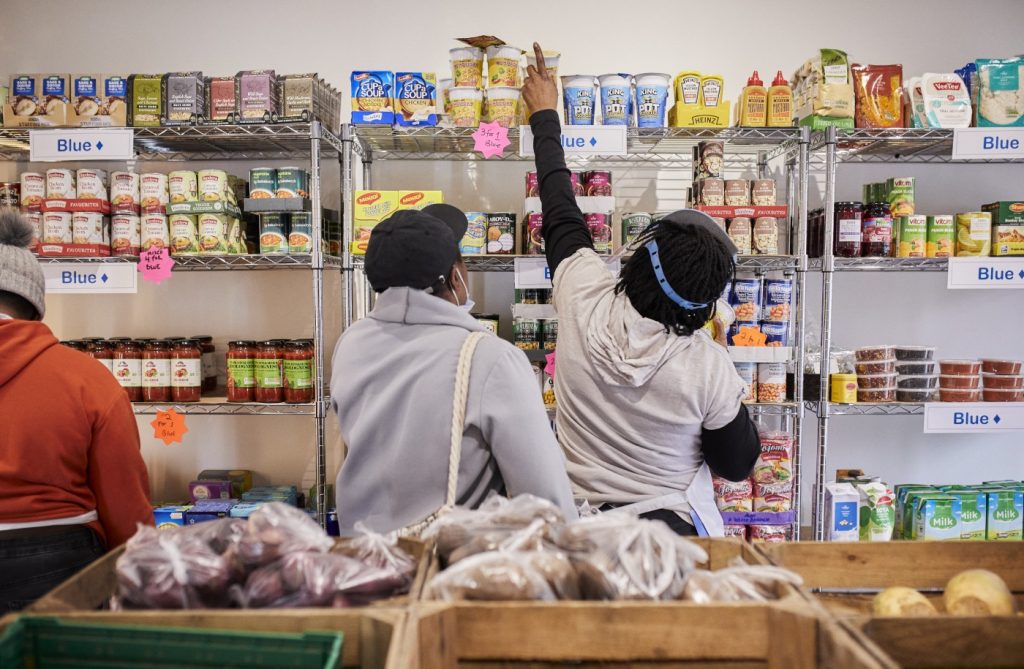
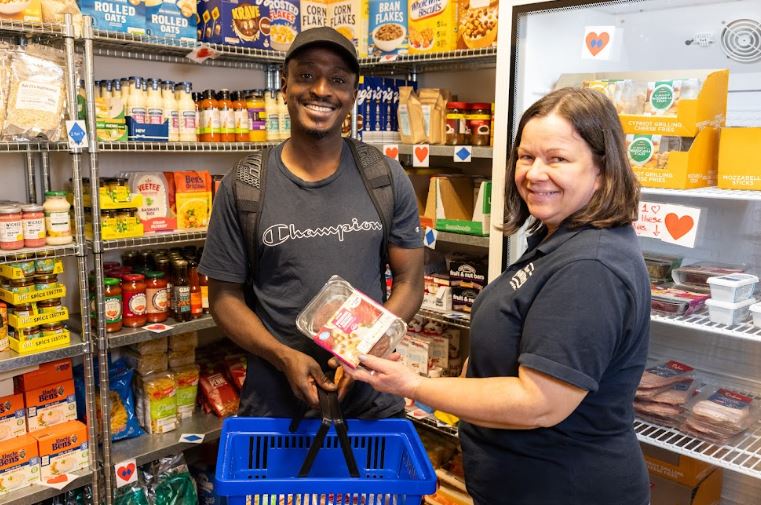
A shopper holding a basket beside a volunteer, in front of full shelves at Hope Pantry in Merthyr Tydfil.

1. Your Local Pantry strengthens communities

One member in Birmingham told us: “It’s community spirit all the way, it brings the community together and it makes people feel part of something.”

And a volunteer said: “I have made new friends, learned new skills and my confidence has increased. I have gained valuable work experience. I really enjoy being a volunteer.”

74% of Pantry members say they now feel more connected to their community.
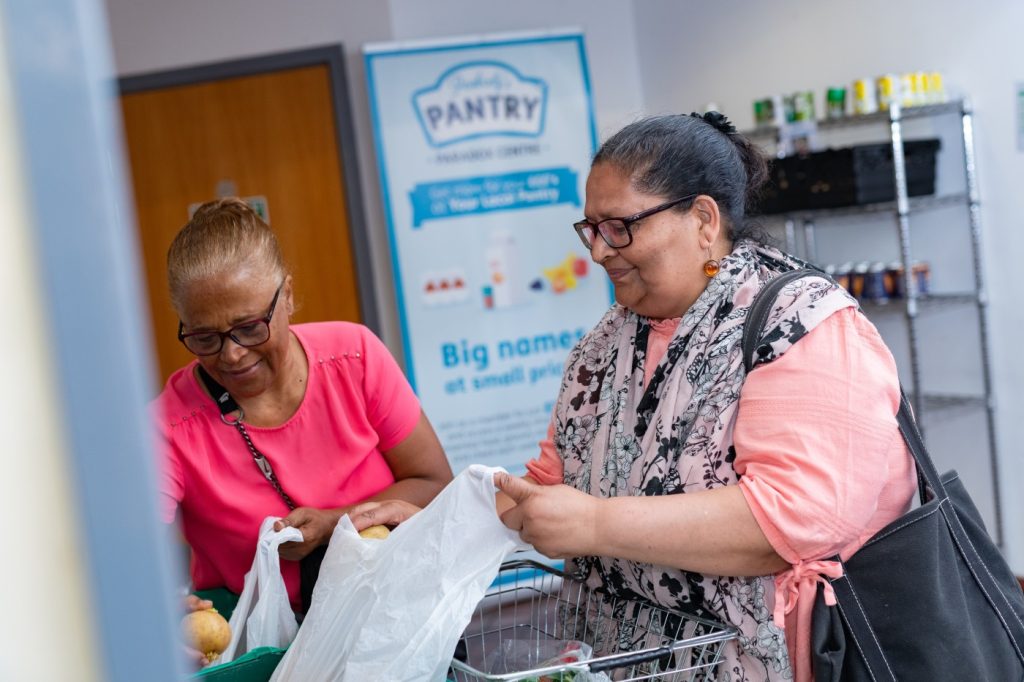
Two Pantry members with their shopping at Peabody Pantry in Chingford

2. Your Local Pantry membership leads to friendship

Pantry membership leads to improved physical and mental wellbeing. Access to new friends, community, good food and new opportunities all contribute to this.

Barbara, a Pantry member in Chingford, told us: “I have made a lot of friends here. I am now a member of the wellbeing cafe and social club.”

Another member said: “I was very lonely and going to the Pantry helped me make friends who support my mental health as we talk outside the Pantry.”

Ellie, a volunteer, said: “Friendships are one of the biggest benefits that people get from the Pantry.”

66% of Pantry members say they have made new friends.
A volunteer and a customer at the Peckham Your Local Pantry

3. Your Local Pantry improves health and wellbeing

Many Pantry members report feeling better after joining a Pantry – physically and/or mentally. 

Pantries provide a wide range of foods, including fresh produce, making it easier for people to maintain the diet they want to, and the community and dignity of Pantries are cherished by members.

Don, a Pantry member in Leith, told us: “The free vegetables and fruit is great. I’m on a limited income so I was buying processed food as it’s cheaper, but it’s not as good for you.”

68% say Pantry membership has improved their physical health, and 83% say it is good for their mental health.

4. Your Local Pantry improves household finances

On average, Pantry members save £21 on groceries each time they visit. That means members who attend weekly can save more than £1,000 a year on shopping bills. 

One member told us: Being a carer limits my finances, this allows me to stretch further with
two grown-up children at home.”

Another said: “I now have peace about my finances, and especially about providing meals for my family. If I start to feel concerned again I just think – Wednesday is coming – don’t panic! I no longer feel shame about my financial situation, I feel proud of how it has changed – I have my dignity back.”

97% of members say Pantry membership has improved their household's financial situation.

5. Your Local Pantry shops prevent food waste

The sheer vastness of national and global food supply chains mean there’s always a risk of some food going to waste.

Pantries are an efficient and ethical redistribution route for surpluses, via national charity Fareshare or through direct relationships between individual Pantries and businesses local to them.

One member told us: “I hate food waste. This along with affordability were my two main reasons for joining. What I got in return, that was unexpected, was community and friendships.”

98% of Pantry members say tackling food waste is important to them.
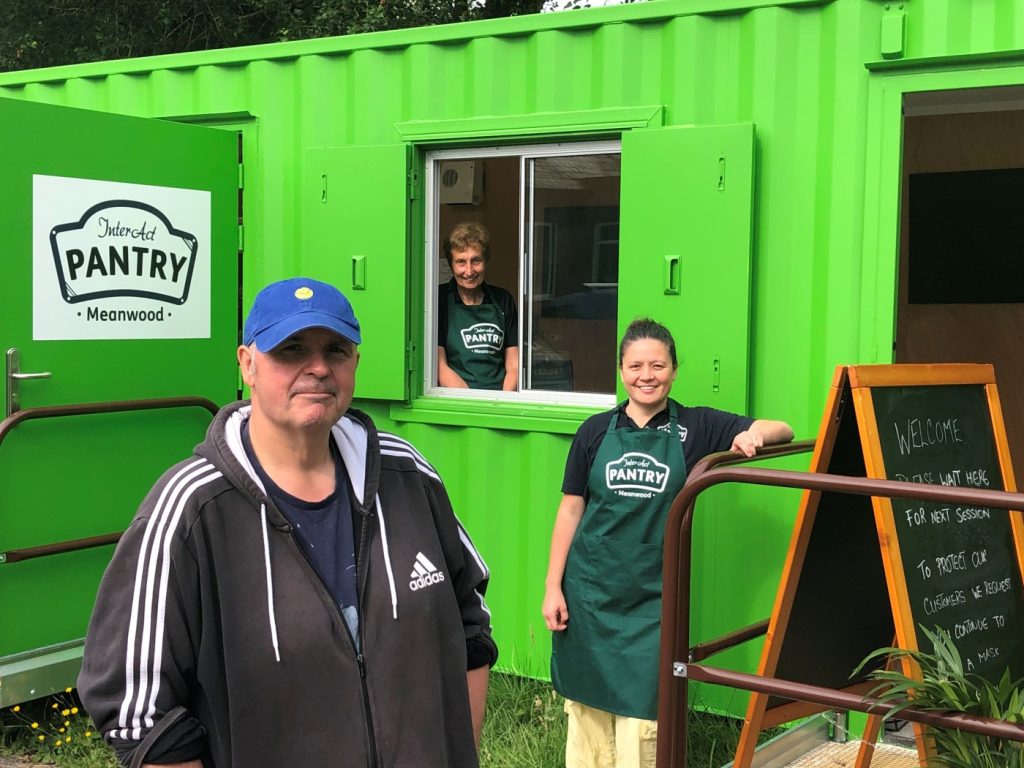
InterACT Pantry in Leeds: a green shipping container, with three people outside

6. Your Local Pantries nurture dignity and agency

Charities and community projects don’t always manage to maintain people’s dignity when it comes to food access. Pantries are different, as members testify.

Natalie in Liverpool told us: “Some people feel ashamed going to food banks, you feel like you are getting labelled. In the Pantry you are actually paying for stuff. It makes me feel, I have paid for me shop.”

Another member in Birmingham said: “I feel happy and don’t feel ashamed going in here, or feel like I’m being judged. Everyone is treated the same.”

A member in Leith said: “At the Pantry, you have choice, which is important. You can choose what you want.”

7. Pantries are a route to so much more

Food is often what brings people to Pantries. But once there, members find so much more.

Every single Pantry in the network offers some form of additional support or connection. 

Sometimes that is helpful introductions to other services.

Sometimes it means bringing other services and opportunities into the Pantry. 

Sometimes it means bringing members together to start making change happen themselves – such as in Peckham, Epsom and Portsmouth, where there are member steering groups, and where members are looking to take part in Speaking Truth To Power projects, opening the doors to many new opportunities.


100% of Pantries connect to wider services or opportunities

Read more about the full impact of Pantries in our So Much More report...

In sum? Pantries are bringing huge benefits to individuals, families, neighbourhoods and society as a whole.

If you’d like to know more, or would like to discuss opening a pantry, visit yourlocalpantry.co.uk

The amazing 11-year-olds uniting a community through food

Make Them Pay: We’re backing the call for a just tax system

Glory: How I’m striving for change and a better society

Church Action on Poverty Sheffield: 2025 pilgrimage

Empty Plate Project lets local people be heard

We have a new Chief Exec – and we’ll continue to be a catalyst for change!

Are churches losing faith in low-income communities?

“The cuts are deeply immoral and should be opposed by all Christians”

SPARK newsletter summer 2025

Let’s End Poverty: what comes next?

Faith, justice & awesome activists: Niall reflects on his 28 years

In a queue, and newly homeless, I realised: this is where change begins

Legacies: invest in a future without poverty

Sharing Power to Shape Mission

Activists work to shape policies of the future

Are churches losing faith in low-income communities?

Church Action On Poverty North East 2025 AGM

The activists Speaking Truth to Power in York

We’re listening!

5 February 2021

Neighbourhood food pantries can be at the heart of Britain’s pandemic recovery, strengthening communities, improving health, and loosening the grip of poverty.

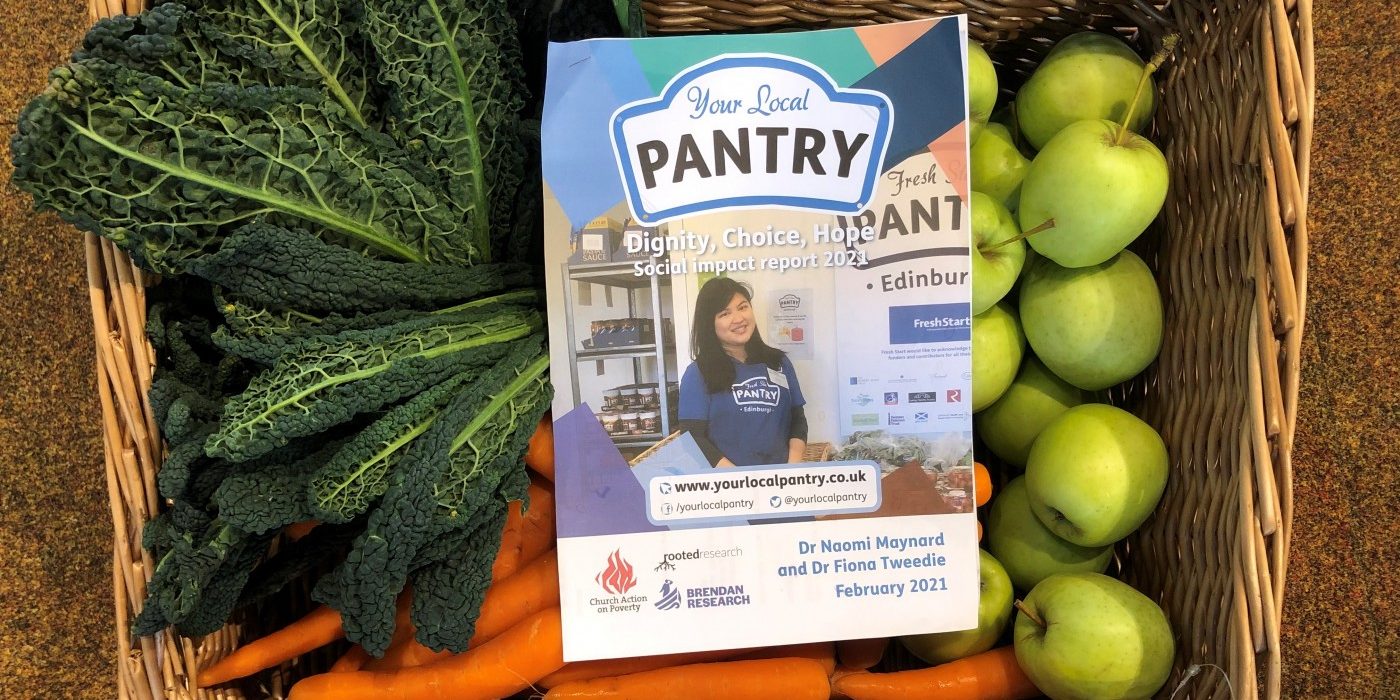
The Your Local Pantry network today [Friday 5 Feb] launches its 2021 impact report, charting the difference its pantries are making to members and their communities.

In the past year, the number of pantries has risen from 14 to 42. More than 6,800 UK households, including almost 12,000 adults and 8,000 children are now members.

Niall Cooper, director of Church Action on Poverty, which runs the network, said:

“The rapid growth of the Your Local Pantry network offers a beacon of hope, demonstrating that communities can be at the forefront of developing practical and sustainable long-term responses to the pandemic. The network has grown exponentially and is rapidly becoming a key component of community-led recovery across the country. It could easily double in size again in the next two years.

“Of course, we need urgent action by Governments and employers to ensure households have access to secure and adequate incomes, free from the grip of poverty. But at the same time as pressing for such action, our goal over the next five to ten years is to help develop a national network of Local Pantries building dignity, choice and hope at all times for thousands more people. They can help drive the rebuilding of neighbourhoods, and ultimately strengthen the voice of communities who are too frequently overlooked, neglected, or stigmatised.”


Gillian Oliver, Your Local Pantry Development Worker, said:

“When people get in touch about starting a Pantry, they usually have experience of charitable food projects of one kind or another. In 2020 many were councils, grappling with food provision in a national emergency and looking for something new: something local people can lead, something that isn’t constantly grant-seeking but which pays its own way. And that’s what a Pantry is – it’s not charity – it’s not a food bank. It’s a food club that helps your money go further. You can join without being referred and remain a member for as long as you wish.” 

The impact report, Dignity, Choice, Hope is based on interviews and surveys with 490 members from 19 pantries, and on stock data and volunteer and member stories.

Findings include:

  • 95% of members said being in a Pantry had improved their household finances
  • 70% feel more connected to their local community
  • 69% say their physical health has improved
  • 76% say membership has improved their mental health
  • 57% say they have made new friends
  • 59% say they now eat less processed food
  • 54% say they now eat more fresh fruit & veg

One member at St Andrew’s Pantry in Liverpool said: “The Pantry is helping me a lot financially to make fresh healthy meals, leaving me more able to pay my bills, which was something I was struggling to do. I was eating a lot of frozen food and struggling to put gas and leccy in my meter. Thanks to the Pantry this is no longer an issue.”

Another in Birmingham said: “I feel happy and don’t feel ashamed going in here, or feel like I’m being judged. Everyone is treated the same.”

The report shows that pantries have been instrumental in increasing resilience, building community, saving money, and promoting health and well-being for thousands of people.

The past year’s growth has been fastest in Liverpool, where the St Andrew’s Community Partnership has opened ten new pantries with total membership of more than 2,200, supported by Liverpool City Council and Together Liverpool. There has also been rapid growth in the West Midlands, Edinburgh, Cardiff and London, and pantries have also opened in Lowestoft, Dover, Salisbury and Dorset.

Members join pantries by paying a small weekly subscription (typically around £5), which entitles them to £20 or more a week of groceries, meaning members can save more than £780 a year. Stock comes through FareShare and local suppliers, and a key principle of pantries is that people have access to a good choice of high-quality food. The choice is central to sustaining dignity, but the research shows membership benefits extend far beyond food access and saving money.

The past year has seen a wide range of organisations support the pantry model, including Liverpool City Council, Burgess Hill Town Council in Sussex, Oasis Academy Trust in the West Midlands, Peabody Housing Trust in London, a GP-surgery in Dorset, a local arts centre in north Edinburgh and many smaller neighbourhood organisations and faith groups.

The Your Local Pantry model was pioneered by Stockport Homes in 2013, and developed into a national network by Church Action on Poverty.

Elena Vacca, Community Food Officer at Foundations Stockport (part of Stockport Homes Group), said:

I’m glad that the model we created has been rolled out across the UK by Church Action Poverty and therefore it’s had the chance to help support more people throughout the pandemic in terms of accessing food but also in tackling social isolation. In Stockport, residents have been grateful to get access to the food they need with dignity, providing a hand up rather than a hand out.”

Notes to editors

  • The impact report, Dignity, Choice, Hope can be downloaded here. It includes quotes from many pantry members and volunteers.
  • The report is authored by Dr Naomi Maynard of Rooted Research in Liverpool and Dr Fiona Tweedie of Brendan Research in Edinburgh.
  • If you have any queries or to arrange interviews with pantries in any particular area, email gavin@church-poverty.org.uk
  • Your Local Pantry was formed by Stockport Homes Group in 2013, and developed into a national network by Church Action on Poverty. The roll-out is supported by Thrive Together Birmingham, St Andrew’s Community Network Liverpool and Faith in Community Scotland.
  • Pantries are run along cooperative lines, by and for their members and are run as neighbourhood shops, with uniformed staff, helping to reduce the stigma.
  • They are open to anyone who lives in the local area, with no need for referral, and there is no time limit on membership.
  • Members can choose what they want, using a colour-coded system to ensure access to a balance of fresh, packaged and higher-value foods.
  • Your Local Pantry insists on good quality food, including fresh fruit and vegetables, frozen and chilled food, including meat and dairy products, alongside tins and packets.
Naomi Maynard with the Dignity, Choice, Hope report
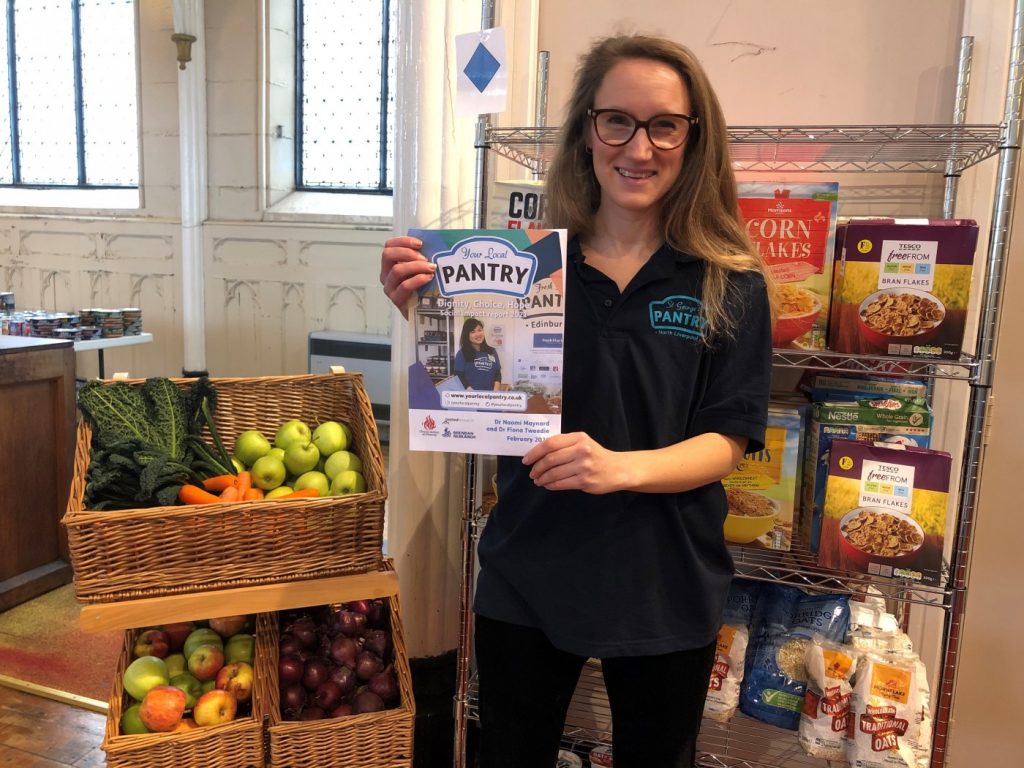
Your Local Pantry volunteers in Liverpool with the new report

Why Christians can’t keep out of politics

26 in 26: 200 churches register for social justice idea

Pilgrims call for more support in low-income neighbourhoods

How should churches address rural poverty?

Faith In The City: why it still matters, 40 years on

Pantries reach 1 million visits – as new research proves they work

The Taxpayers Against Poverty logo

The moral case and a 3-point plan for tax reform

A poster reading: "Faith In The City: A call for action by church and nation"

Synod is about to debate poverty. Here’s what we long to hear…

A woman stands beside a banner about homelessness, facing a mirror with words written on it.

How music and art helped churches grasp poverty

Rev Jules Middleton, Associate Vicar at Trinity, Lewes, responds to the child hunger debate

This summer I, my colleagues, and an army of amazing volunteers ran the Food Hub in Lewes to help the local foodbanks cope with the overwhelming number of referrals coming in – due to the pandemic. I believe a key reason the church is here, is to help, support and love those in our community – all, not just those who come to church. But running a food hub is not something I really want to celebrate and here’s why…

We already have 3 foodbanks in Lewes, a town that most people assume is affluent. Of course it’s not inner city London, our problems seem small compared to larger areas but they don’t feel small to those who face not being able to feed their families, or pay the bills, on a daily basis. Running the Food Hub I have heard first-hand the real life struggles of those who need to use a foodbank, I’ve seen parents in tears or overwhelmed with shame, pathetically grateful for a few carrier bags of tinned goods that most of us would take for granted. It’s been frankly, heartbreaking.

Let's think before judging

It’s so easy to think that this sort of thing only affects them over there, “the poor” and people often assume those on benefits are bludgers, lazy or stupid. Frankly if anything is stupid or lazy, it’s taking that view without doing some homework, because the reality is that unless you’re earning a super salary, or have some decent savings, any one of us could end up needing Universal Credit or a foodbank.

People find themselves needing support in this way for lots of reasons, perhaps an unexpected bout of ill health – short term or long term, loss of a job or being made redundant, self-employed and can’t work for a period of time, having a child, having a child with extra needs, worldwide pandemic… For most people it only takes one thing to change their stable situation. One missed payment means a fee, possible bank charges and often no way to make them up, so next month adds on another charge, and another fee, and so on ad infinitum. It’s very easy to slip into debt quickly.

We could have so much more compassion

So it was deeply saddening to hear that the voucher scheme for free school meals in the holidays is not going to be extended and, more so, to read some of the negative and judgemental comments posted online.

So many of us view things from a place of privilege or from our own experiences. We talk a lot about privilege in this day and age but how many of us actually recognise it? How many of us actually bother to try and put ourselves into the position of the person we are idly judging and try to understand what life is like for them? I wonder how many of us have actually spent any time at a foodbank? Or have actually met those struggling with the shame of having to ask for help to support their families?

How many of us have chatted to those who have had some bad luck – lost a job or suffered an injury and been unable to work? If we all did this a bit more I am sure we would have so much more compassion and understanding for each other. And indeed it was so encouraging to see that in response to the news of the voucher scheme ending many cafes and restaurants have chosen to offer free meals for children though half term.

Imagine...

If you genuinely want to know why parents can’t budget better, imagine what it is like if your income is so tight it’s down to the last penny and any tiny thing could throw it out. What if the washing machine breaks (and that’s assuming you could afford to buy one in the first place), or your child has a growth spurt and suddenly needs new clothes, or someone gets sick and you need the public transport fair to get to the hospital?

Or you may ask, why can’t people shop for cheaper food, grow their own food or even forage?! This assumes choice and time, it assumes the time needed to do any of these, it assumes choice of shops and the ability to get to them, or to be able to buy in bulk. It assumes owning or having the money to buy garden tools, seeds and plants, or even having a garden in the first place.

Are you wondering if the benefit system or food banks breed reliance on ‘the system’? Well, if you’ve ever had to apply for benefits you’ll know how hard it is, the paperwork is lengthy and intrusive – and mostly now online. Did you know many digital forms cannot be filled out on a smart phone? And before anyone notes the expense of a smart phone, ask yourself how you would live your life with no access to the internet or even a phone line? Imagine you can’t get a contract for a landline because you don’t have a good credit rating – because of those bank charges that were not your fault? Don’t think that anyone ‘wants’ to rely on this.

All of this is also to assume that a person needing help has no physical or mental health concerns that might affect how they live and whether they are actually able to find out what support they can get, let alone apply for it.

Marcus Rashford, a footballer who has been campaigning for free school meals, was accused of ‘celebrity virtue signalling’ by an MP this week. But isn’t it a shame that he or any other celebrity even needs to highlight issues like these? Wouldn’t it be much better if our leaders led by example, in helping us all to think about how others’ lives might be; who might encourage us all to look out for one another. A bit like a version of herd immunity where we all protect each other by our love for one another, and with the recognition that sometimes bad stuff happens for no reason and no one is to blame. Isn’t that the sort of society we want to be?

I know some will say I’m simply a ‘bleeding heart lefty’ but you know, I believe Jesus Christ bled and died for each of us, so if my heart is aching for those who are suffering, I’d say that’s a pretty good label.

Why Christians can’t keep out of politics

26 in 26: 200 churches register for social justice idea

Pilgrims call for more support in low-income neighbourhoods

How should churches address rural poverty?

Faith In The City: why it still matters, 40 years on

Pantries reach 1 million visits – as new research proves they work

The Taxpayers Against Poverty logo

The moral case and a 3-point plan for tax reform

A poster reading: "Faith In The City: A call for action by church and nation"

Synod is about to debate poverty. Here’s what we long to hear…
A woman stands beside a banner about homelessness, facing a mirror with words written on it.

How music and art helped churches grasp poverty

This autumn, Church Action on Poverty will be working harder than ever to challenge poverty, and we hope you’re up for joining us in this urgent task.

By our director, Niall Cooper.

We will be joining with others on three national campaigns to speak truth to power over the next two months.  With others, we will be making the case for urgent Government action to ensure that the millions of families who have been swept into poverty and debt as a result of Covid 19 are offered a lifeline to keep them afloat through the rough seas ahead.

Quite literally, millions of people have been swept into poverty, unemployment and debt as a direct result of the economic impact of Covid 19. People who were previously able to keep their head above water are now in severe difficulty. Others, who had been just staying afloat, now face being overwhelmed by circumstances entirely beyond their control.

1: Rishi Sunak can provide struggling families with a lifeline

Amongst all the other measures the Chancellor, Rishi Sunak, has taken over the past months, few have been more important to struggling families than the extra £20 a week on the basic rate of Universal Credit.

This has been a lifeline for many families as they’ve struggled to get through the coronavirus storm.  However, it is due to end in April 2021, whipping the vital lifeline away. In October, the Chancellor has a chance to do the right thing and announce that hard pressed families will be able to keep the extra £20 a week on a permanent basis. 

2: Marcus Rashford: Speaking truth to power on child food poverty

As the schools re-open this week, there’s much more to be done to ensure children are able to focus on their studies – rather than having to worry about where their next meal is coming from.

It’s this goal – ending child food poverty in Britain – which Manchester United and England footballer, Marcus Rashford, now has in his sights.  Marcus himself grew up in poverty in Wythenshawe in south Manchester, and knew as a teenager what it was to go without food.  That is what is motivating him to speak truth to power

“Food poverty is contributing to social unrest,” he wrote, reflecting on a series of recent meetings with families in need of the same support he counted on as a child. He described “watching a young boy keeping it together whilst his mother sobbed alongside him, feeling like he has to step up to protect his family and alleviate some of that worry. He was nine years old.”

“I know that feeling,” he wrote. “I remember the sound of my mum crying herself to sleep to this day, having worked a 14-hour shift, unsure how she was going to make ends meet. That was my reality.”

Marcus is backing calls on the Chancellor, to fund the implementation of three key policy recommendations from the national food strategy, a Government-commissioned report highlighting huge economic and health inequalities, which will be aggravated by the coronavirus crisis. These include:

  • extending free school meals to all families in receipt of Universal Credit
  • rolling out the Holiday food and activities programme, designed to tackle the growing problem of ‘holiday hunger’ nationwide.

3: Challenge Poverty Week

The first ever Challenge Poverty Week in England and Wales will run from October 12th to 18th, modelled on the successful Challenge Poverty Week which has been running in Scotland for the past seven years.

Challenge Poverty Week will provide an opportunity to celebrate the work that a wide range of organisations are doing to challenge poverty across the country It aims to:

  • Raise voices in unison against poverty and show that we all want to live in a more just and compassionate country.  
  • Show what is already being done at community level to challenge and alleviate poverty.
  • Build awareness and support for long term solutions that focus on enhancing the dignity and agency of people in poverty themselves.  
  • Change the conversation around poverty and help end the stigma. 

The website will be launched in the next few days, but for now please follow our twitter feed, facebook page and instagram account.

Why Christians can’t keep out of politics

26 in 26: 200 churches register for social justice idea

Pilgrims call for more support in low-income neighbourhoods

How should churches address rural poverty?

Faith In The City: why it still matters, 40 years on

Pantries reach 1 million visits – as new research proves they work

The Taxpayers Against Poverty logo

The moral case and a 3-point plan for tax reform

A poster reading: "Faith In The City: A call for action by church and nation"

Synod is about to debate poverty. Here’s what we long to hear…
A woman stands beside a banner about homelessness, facing a mirror with words written on it.

How music and art helped churches grasp poverty