

fbpx
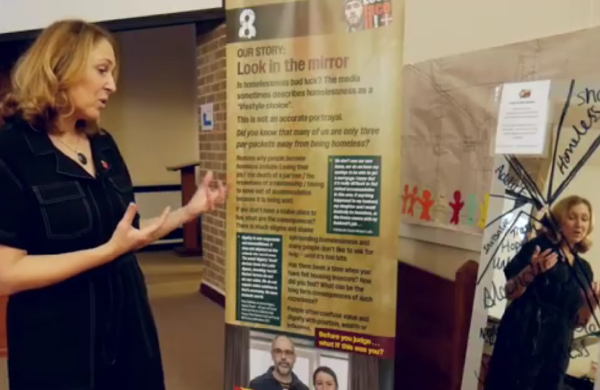
A woman stands beside a banner about homelessness, facing a mirror with words written on it.

Art and music are great ways to bring people together for good - as The Let's Face It! exhibition shows

Churches in the South West of England hosted an immersive art exhibition to improve people’s understanding of poverty and homelessness by sharing first-hand accounts.

More than 1,000 people visited the Let’s Face It! installation at Helston Central Methodist Church, Truro Methodist Church, The Mint Methodist church, The Royal Lyceum Theatre in Torquay, and Sherwell United Methodist Church in Plymouth.

Works included a rucksack filled with bricks with ‘cold’ and ‘hungry’ written on them, and a mirror adorned with labels, through which people were invited to view themselves.

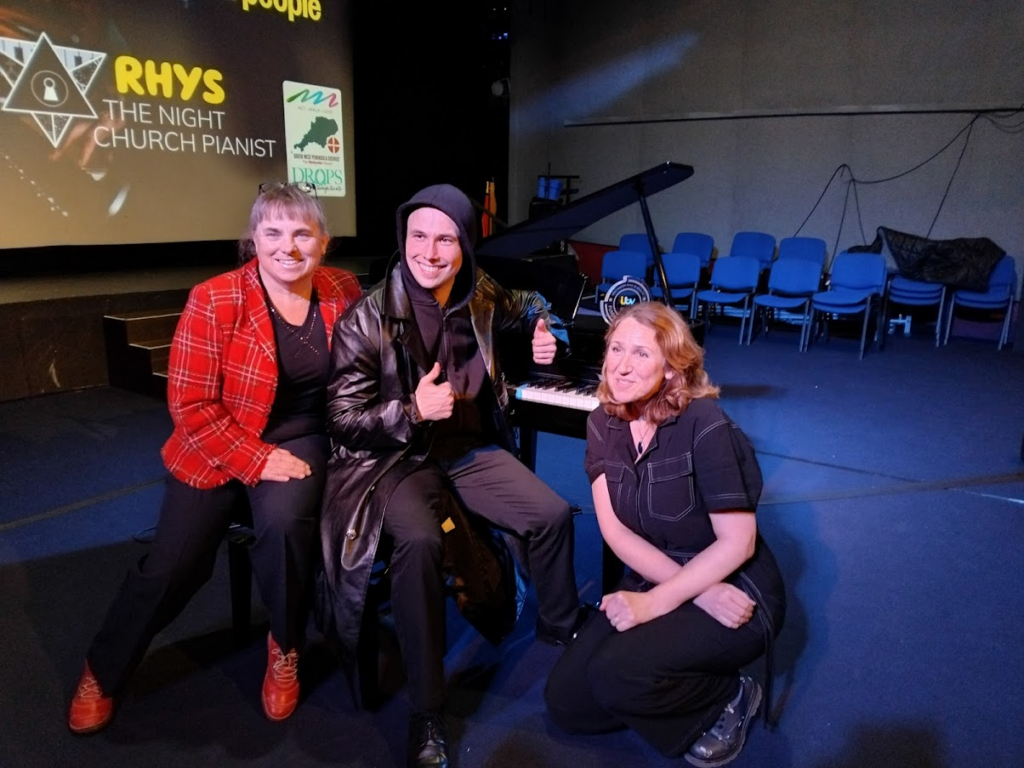
Organisers also used some of last year’s Church Action on Poverty Sunday resources, and there was live music and testimony by Rhys Wynne-Jones, ‘the nightchurch pianist’, who shared his experience of homelessness.

In the video of the exhibition (above), Rhys says: “Something that homeless people need more than a home is to heal and to be understood, so this art exhibition is vital to have that link between society and people who are homeless.”

Helen Pearce, social justice coordinator for the South West Peninsula Methodist District, said the Let’s Face It! tour drew a positive response and insightful ideas.

She said: “Good news stories are always encouraging. This is certainly that. The whole initiative was supported by prayer an we saw many amazing answers in how it came together and how it was received.”

One visitor said: “I was just blown away by all of it. Humbling is the right word. What Rhys said was so profound and heartfelt – and what a talent!”

The Let’s Face It! organisers have kindly given a share of the money donated at the events to Church Action on Poverty, to support our ongoing work.

The exhibition has been designed for easy transportation and to be used in other spaces. If churches from other areas are interested in the exhibition coming to them, please contact Helen Pearce on socialjustice@swpmethodist.org.uk or 07450 989571.

A posed shot of three people sitting in a hall
  • The exhibition was made possible through a seed corn grant from the South West Peninsula Methodist District and a grant from the Susanna Wesley Foundation. 
A headshot of man in a woollen hat, with "Let's Face It" written alongside

How music and art helped churches grasp poverty

Why Christians can’t keep out of politics

26 in 26: 200 churches register for social justice idea

Pilgrims call for more support in low-income neighbourhoods

How should churches address rural poverty?

Faith In The City: why it still matters, 40 years on

Pantries reach 1 million visits – as new research proves they work

Grief is hard enough: it’s time to improve funeral support

A woman stands beside a banner about homelessness, facing a mirror with words written on it.

How music and art helped churches grasp poverty

A Bible

Why Christians can’t keep out of politics

A poster reading "26 in 26", surrounded by 26 text boxes

26 in 26: 200 churches register for social justice idea

A Bible

This spring, Church Action on Poverty will support a course looking at combining theology and politics. James Butler of the Church Mission Society sets out why engaging with politics is a key aspect of the Christian faith. 
When Christians speak out about the big issues and challenges of the day, they are often met with the comment: “Churches should keep out of politics.”  

Faith in Public: Political Theology for Mission, a three day, residential event, argues the opposite: churches and Christian organisations must engage in the big issues of our day in public ways. It’s part of our faithful witness and we have something important to offer these conversations. 

Wondering what this looks like in practice? If you are a Christian working in a public role, involved in a church or organisation seeking to engage with society, or interested in exploring what it means to witness to Christ in public, then this course is for you.

Introducing the Faith In Public course

The event will take place in May in Manchester, which has a long history of being at the cutting edge of politics and social justice in the UK. It will provide the opportunity to spend time with churches, organisations and people living faith in public.
  • Grace Thomas, Canon Missioner at Manchester Cathedral and Environment Officer for Manchester Diocese, will explore how the Cathedral has been a place of public witness over the centuries.
  • Ian Rutherford, City Centre Minister at Methodist Central Hall Manchester, will help delegates explore how faith is lived in public today.
  • Dominic Budhi-Thornton, a public theologian, and James Butler, Church Mission Society Pioneer Mission Training leader, will delve deeper into the biblical and theological roots of such engagement.
  • Jane Perry, from Church Action on Poverty, will discuss the importance of hearing from people with lived experience of poverty, and outline practical ways to ensure they are fully included in church-led political engagement.
Delegates will also meet a number of people working in public roles, including politicians, civil servants and leaders of organisations, to discuss how they navigate their work through their faith.
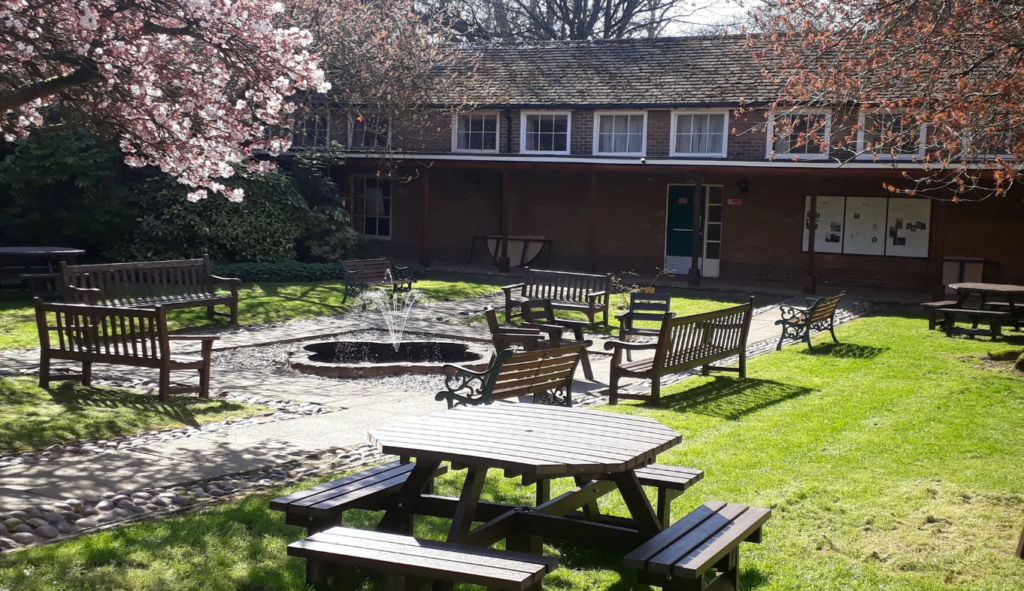
Wooden tables and benches in a garden courtyard
The course takes place at Luther King House in Manchester

What previous Faith In Public participants said

Church Mission Society Pioneer Mission Training ran a similar course in London last year. Reflecting on the experience Jo, a vicar and leader of a mission-focused charity, said:

“This course offered a rare moment when politics was not only allowed at the dinner table but welcomed, which I hugely enjoyed. One of the great joys was seeing people who clearly love Jesus already living this out in their communities and having the opportunity to learn from their experience. I’d recommend it to anyone who wants to think deeply about local politics and discover new ways to put mission into practice.”
Jo

Philip, who works for a charity around justice, commented:

“Is it possible to be political and missional at the same time? Well, this is exactly what this programme was all about. It enabled me to deepen my understanding on how I can serve in God’s mission by becoming politically aware and engaged. This programme was also hands-on and practical. And I came away with a sense that I am connected to a wider community of practitioners of justice.”
Philip
Background to the Faith In Public course

When teaching on mission I realised that there were a whole range of issues people were facing and questions that people had which had long been reflected on by Christians under the names of political theology and public theology. 

In this course we bring together mission studies and the insights from political and public theology to explore how to live faith in public.

By understanding how historically people have understood the relationship between church and state, and how churches and Christians have navigated public life, we will help people to draw out new ways of thinking, new resources and fresh practices to live faith in public.

Sign up

Take part Faith in Public: Political Theology for Mission takes place from Thursday 7 to Saturday 9 May 2026. Accommodation and some teaching will take place at Luther King House, with additional travel into Manchester City Centre to visit relevant projects and venues.

Get involved

Book your place

How music and art helped churches grasp poverty

Why Christians can’t keep out of politics

26 in 26: 200 churches register for social justice idea

Pilgrims call for more support in low-income neighbourhoods

How should churches address rural poverty?

Faith In The City: why it still matters, 40 years on

Pantries reach 1 million visits – as new research proves they work

Grief is hard enough: it’s time to improve funeral support

New toolkit: Hosting a regional anti-poverty roundtable

Review: The Perils of Universal Credit

Annual review 2024-25

On poverty and justice: A sermon and prayer for this week

New: The Autumn 2025 Spark newsletter

Prayer, care and action: how Christians should respond to injustice

A woman stands beside a banner about homelessness, facing a mirror with words written on it.

How music and art helped churches grasp poverty

A Bible

Why Christians can’t keep out of politics

A poster reading "26 in 26", surrounded by 26 text boxes

26 in 26: 200 churches register for social justice idea

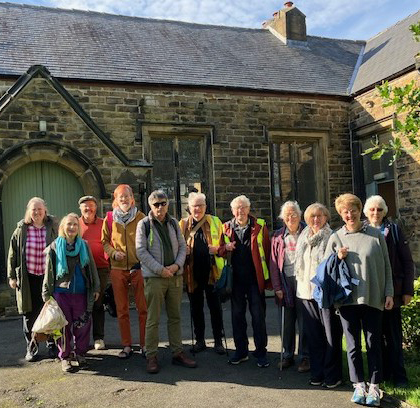
A group of 11 people standing in front of a church building

Bob Rae reports on Sheffield Church Action on Poverty's annual pilgrimage

Anti-poverty campaigners in the Sheffield neighbourhoods of Firvale, Wincobank and Firth Park are calling for major improvement in the help provided for people struggling to find work, and for free face-to-face advice for people forced to rely on food banks.

The calls came during an Urban Poverty Pilgrimage marking the 25th anniversary of the founding of Sheffield Church Action on Poverty.

Speaking in Firth Park Methodist Church, at the end of the event, Jayne Franklin, from the S6 Foodbank, told pilgrims people wanted to work, but found searching for a job daunting and needed additional help.

Calling for free, face to face advice services to be provided for food bank users, she said some food bank users were isolated and marginalised and had complex problems. Sometimes they did not even realise they were in debt.

They desperately needed help, but some essential advice services were no longer available face to face and users faced costs for accessing services that they could ill-afford.

A group of 11 people standing in front of a church building

The annual Sheffield CAP Pilgrimage is designed to raise awareness and understanding of how poverty is affecting people in Sheffield and the initiatives to fight it.

This year, the pilgrimage traversed an area of Sheffield which is ethnically very diverse, including people originally from Pakistan, Nigeria and other parts of the world beyond Europe who settled in the 20th century to be followed by members of the Roma community who had suffered extreme deprivation in Slovakia.

Throughout the area, family groupings tend to be large, the level of qualifications can be low and research shows a third of children are living in poverty,

Although the area has suffered from car crime and litter problems there is a real sense of community and people do not feel nervous walking in the streets in the evening.

The Pilgrimage passed the sites of no fewer than three Foodbanks, including the Firvale Food bank, which operates out of St Cuthbert’s Church, where the Pilgrimage began.

They heard that the S6 Food Bank was founded 15 years ago and had only three sites before the Covid pandemic. Since then, growing need has resulted in it expanding to a dozen sites from which it distributes a ton of food a week to support local people, one third of whom are children.

After visiting Firvale Community Hub, pilgrims praised the work of the Sheffield City Council-backed hubs, which, in Firvale’s case, provides education, employment, health, culture and immigration serves, as well as support for pregnant women.

Among the other sites the pilgrims visited was Upper Wincobank Undenenominational Church, built in as a school by Mary Ann Rawson, who, after her husband died, devoted herself to anti-slavery and educational activities, networking with many other campaigners in the UK and overseas.

Sheffield CAP chair, Dr Joe Forde, who recently co-authored a book examining the impact of the Church of England’s Faith in the City anti-inequality initiative, said: “This year’s pilgrimage took us past hospitals, schools and housing estates which are all dealing with people feeling the impact of poverty in one way or another.

“The lack of face-to-face support services for people suffering poverty and the rise in demand for foodbanks is an indictment of our country.

“They would be less necessary if the Government could remove the social security cuts imposed by the previous Government, including the two child limit and the benefit cap.

How music and art helped churches grasp poverty

Why Christians can’t keep out of politics

26 in 26: 200 churches register for social justice idea

Pilgrims call for more support in low-income neighbourhoods

How should churches address rural poverty?

Faith In The City: why it still matters, 40 years on

Pantries reach 1 million visits – as new research proves they work

Grief is hard enough: it’s time to improve funeral support

New toolkit: Hosting a regional anti-poverty roundtable

A woman stands beside a banner about homelessness, facing a mirror with words written on it.

How music and art helped churches grasp poverty

A Bible

Why Christians can’t keep out of politics

A poster reading "26 in 26", surrounded by 26 text boxes

26 in 26: 200 churches register for social justice idea

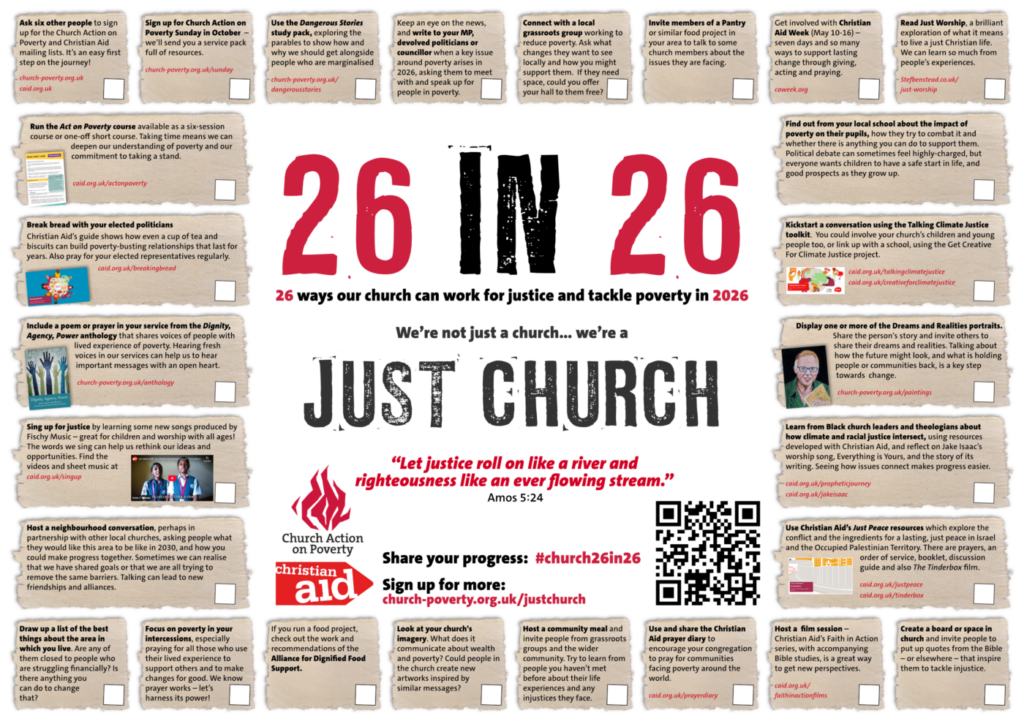
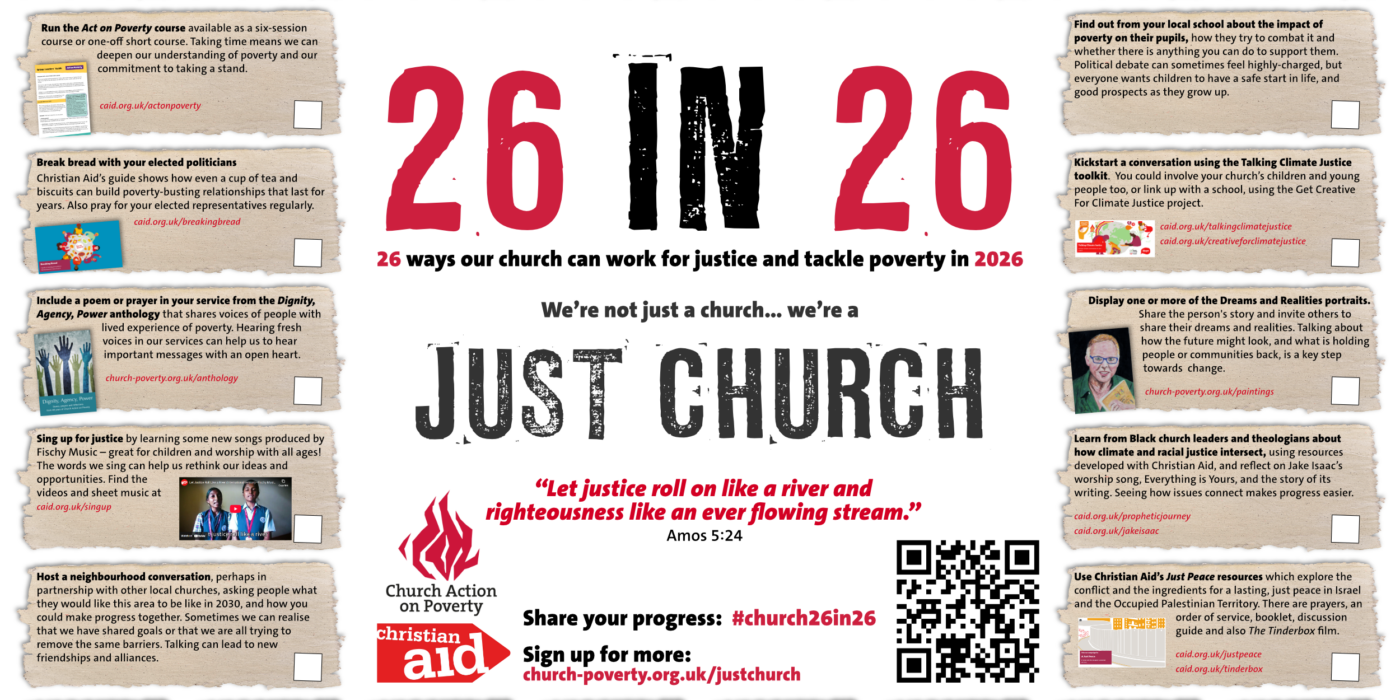
A poster reading "26 in 26", surrounded by 26 text boxes

Justice is integral to our faith. Church Action on Poverty and Christian Aid have teamed up to produce a new poster that your whole church can use throughout 2026.

The poster contains 26 ideas that you and your church could try in 2026.

Some are very easy, some will take a bit more planning, but all are worthwhile.

We’ve sent this to all churches on our existing mailing lists and we’ve also now received 200 new sign-ups for posters. If you too would like a copy then you can download or order it above. 

Let justice roll on like a river and righteousness like an ever flowing stream.
A Bible
Amos 5:24

How to use the poster

  1. If you’re printing your own copy, please print in colour in A3 size. If you’ve ordered a posted copy, it will be on its way.
  2. Display it where lots of people will see it – perhaps in your church hall, or near the entrance, or wherever you share teas and coffees! 
  3. Encourage church members and staff to look through the ideas and take responsibility for making some of them happen.
  4. Mark them off as you go
  5. Let us know how you get on! You can email us, or use the hashtag #church26in26.

A call to action

One of the first churches to sign up was Parson Cross Methodist Church at Mt Tabor in Sheffield. 

Pioneer minister Nick Waterfield said: 

"We need to become a Just Church through our actions, and not just talk about it. As Nelson Mandela famously said: 'Do not look the other way; do not hesitate. Recognise that the world is hungry for action, not words'."
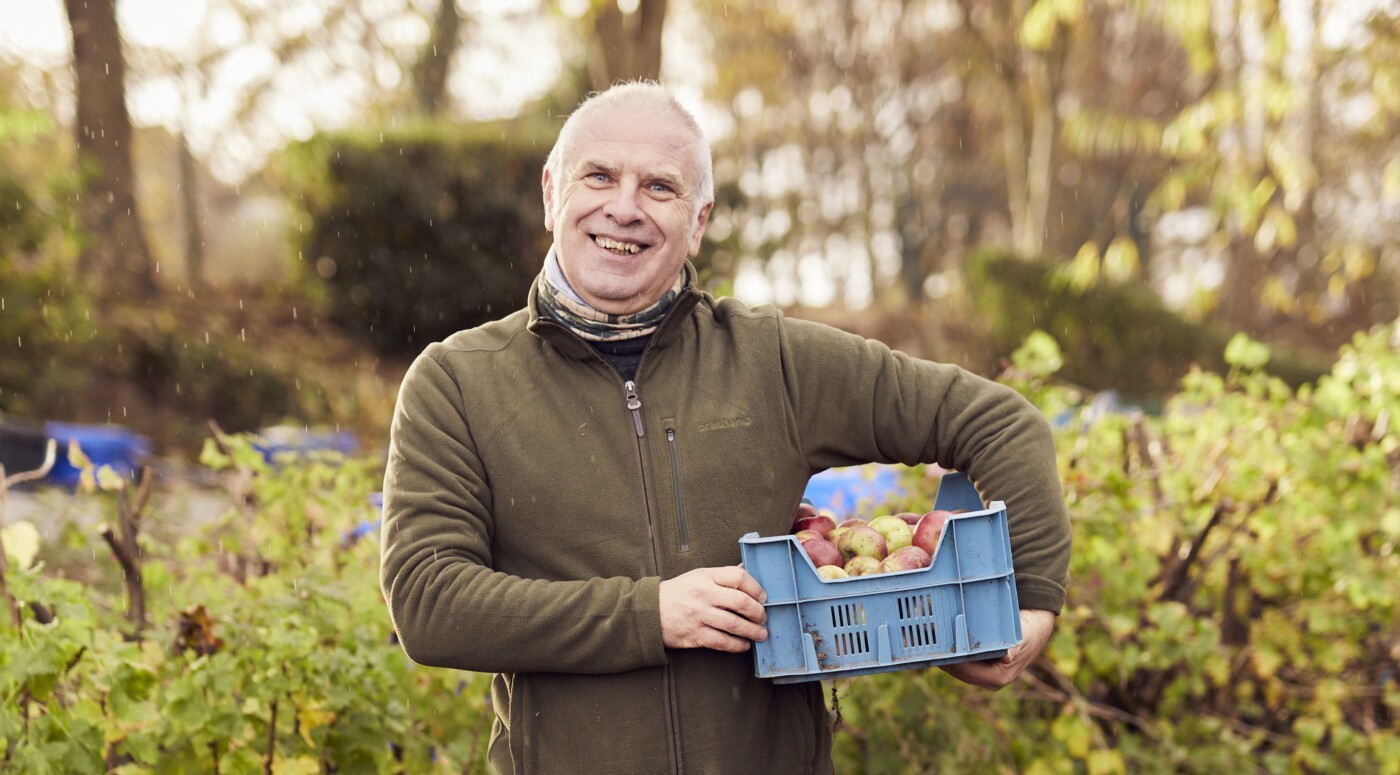
Nick Waterfield outdoors, holding a crate of apples
Nick Waterfield
Pioneer minister, Sheffield

How music and art helped churches grasp poverty

Why Christians can’t keep out of politics

26 in 26: 200 churches register for social justice idea

Pilgrims call for more support in low-income neighbourhoods

How should churches address rural poverty?

Faith In The City: why it still matters, 40 years on

Pantries reach 1 million visits – as new research proves they work

A woman stands beside a banner about homelessness, facing a mirror with words written on it.

How music and art helped churches grasp poverty

A Bible

Why Christians can’t keep out of politics

A poster reading "26 in 26", surrounded by 26 text boxes

26 in 26: 200 churches register for social justice idea