

fbpx
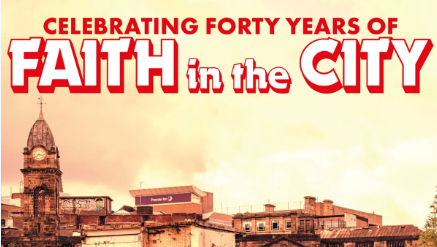
The top section of a book cover, reading Celebrating Forty Years of Faith In The City

In a new book, authors Terry Drummond and Joseph Forde revisit the landmark Faith In The City report, 40 years on.

Faith in the City, published in the autumn of 1985, was a
report that resonated with many congregants in the Church of
England, and is still regarded as being a landmark publication
in post-war Church – State relations.

It was a report that had been commissioned by Archbishop Robert Runcie out of a concern – widely held within the clergy – that the economic and social polices being pursued by Mrs Thatcher’s government were having a damaging impact on inner-city communities, and had contributed to the cause of the riots that had broken out in several English cities in 1981.

Three men standing in Manchester Cathedral: The Archbishop of York, and authors Joseph Forde and Terry Drummond.

The original report drew a huge response

Forty years on, it is difficult to think of any publication from
within the Church of England that has received the level of
intellectual and political hostility that it encountered from
some government ministers, including the Prime Minister,
Margaret Thatcher.

This resulted in it having only a limited impact on changing government economic and social policy. However, we believe that there is still a need for us to remember and reflect on the report, not least because it spoke truth to power.

It did that by challenging the government of the day to rethink its approach in policy areas it believed were adversely affecting urban communities in cities and towns up and down the country, including in its approach to poverty alleviation and welfare provision.

Why we commissioned & edited the new book

It was with this purpose in mind that we decided to commission an essay collection written by some of those who were involved in the publication and implementation of the report itself, and others who have been engaged in urban mission and ministry since. The book is called Celebrating Forty Years of Faith in the City, and is published by Sacristy Press.

A book cover, reading Celebrating Forty Years of Faith In The City

Faith In The City revisited

This collection of essays examines:

  • the impact that the report had at the time of its publication
  • the changes that have taken place in the political landscape in the period since
  • the changes that have taken place in English society in the period since, and
  • the changes that have taken place in the Church of England, including in its approach to urban mission, ministry, and welfare provision.

The result is a book that underscores the importance of the Church’s commitment to local communities, particularly in urban priority areas.

We think that a recovery of the report’s radical challenge rooted in incarnational theology and the strong links between Church, Faith and Society is the best way of ensuring that the Church of England remains connected to urban communities and encourages a new commitment to urban mission and ministry.

Celebrating Faith In The City: launch events

Recently, we were delighted to be interviewed about the book
by the Right Revd Stephen Cottrell, Archbishop of York, at a joint event organised by Greater Together Manchester and
the Church Urban Fund, and held at Manchester Cathedral on 14th November (see photo at the top of this blog).

We have also been invited to speak at an event being held at St Mary’s Church in Portsmouth on 20th November.

We hope that 2025 will be a time to celebrate all that is good
about urban mission and ministry today in the Church of England (and other Churches, too) as we celebrate its 40th anniversary, as well as to reflect on any lessons that we can take from Faith in the City and the impact it had, then and since, on shaping our understanding of urban theology, mission and ministry for today.

How should churches address rural poverty?

Faith In The City: why it still matters, 40 years on

Pantries reach 1 million visits – as new research proves they work

Grief is hard enough: it’s time to improve funeral support

New toolkit: Hosting a regional anti-poverty roundtable

Review: The Perils of Universal Credit

Annual review 2024-25

On poverty and justice: A sermon and prayer for this week

New: The Autumn 2025 Spark newsletter

Prayer, care and action: how Christians should respond to injustice

The amazing 11-year-olds uniting a community through food

A gentle path through a field in the foreground, with a church steeple in the distance among some trees.

How should churches address rural poverty?

The top section of a book cover, reading Celebrating Forty Years of Faith In The City

Faith In The City: why it still matters, 40 years on

A line of people holding cardboard numbers reading 1,000,000

Pantries reach 1 million visits – as new research proves they work

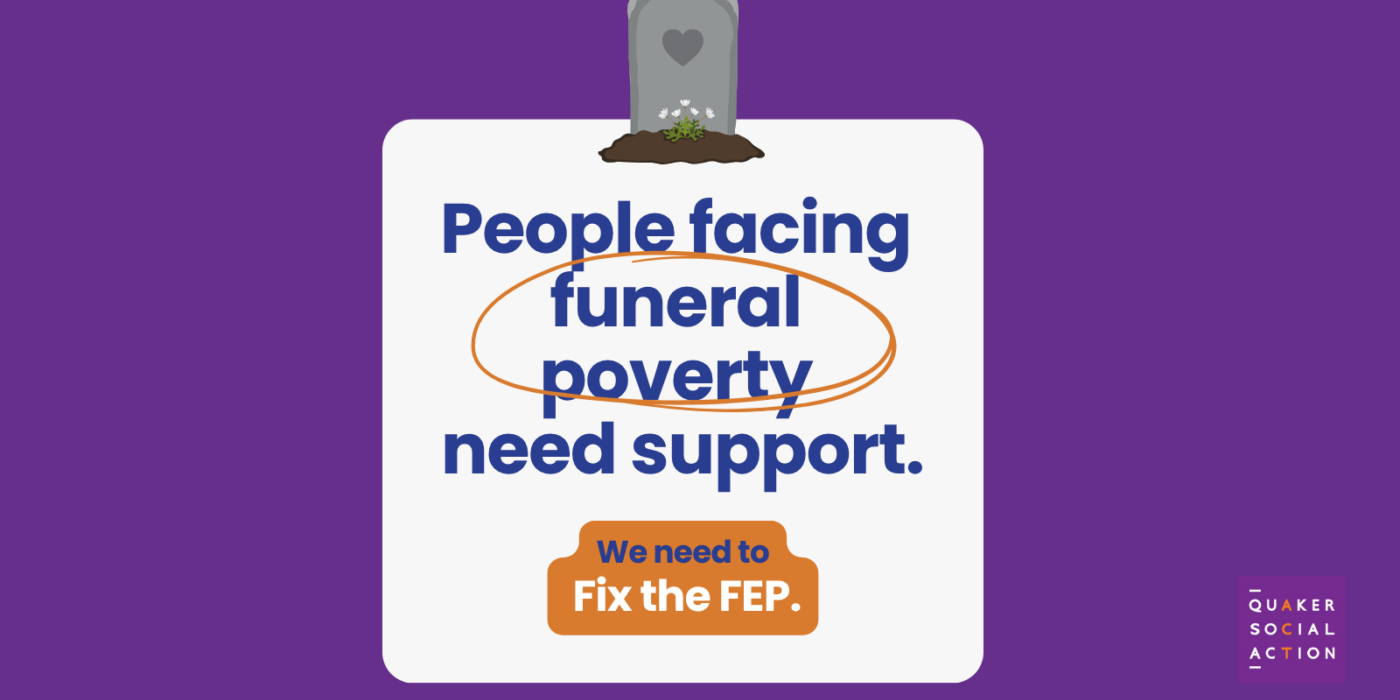
A graphic reading "People facing funeral poverty need support".

Lindesay Mace from Quaker Social Action outlines their latest work to help people with funeral costs

A graphic reading "People facing funeral poverty need support".

Bereavement can be a deeply challenging experience. In the last three years, two people close to me have died, both quite suddenly, and the impact was profound. I experienced brain fog; difficulties concentrating at work; sudden floods of tears in the street; a loss of appetite; difficulty sleeping; and feelings of anger and guilt.

It was tough, but it could have been so much worse. I wasn’t responsible for organising the funerals, nor did I have to manage that while worrying about how on earth I would pay for them. 

But thousands of people across the UK are in that position every year and at Down to Earth, the only UK-wide funeral costs support service, we hear their heartbreaking stories every day.

Two of these stories, bravely shared on video by our clients Sue and Susan, are at the heart of our new campaign, Grief is Hard Enough: Fix the FEP.

Soaring costs and an inadequate safety net

“You’d think that in your darkest, most desperate hour that there’d be somebody there to help you”.

Sue

It’s not uncommon for a funeral with mourners present to cost upwards of £4,000 – but what if you don’t have the funds? Even the simplest option, a direct cremation that takes place with no mourners present, generally costs between £1,000 and £2,000. 

That is a sum far out of reach for thousands of people. The Funeral Expenses Payment (FEP) provides vital financial support with funeral costs and is aimed at people in England and Wales who are in receipt of a “qualifying benefit” (any income-related benefit like Universal Credit). However, the eligibility rules are very narrow and don’t reflect real life, leaving thousands of people who are receiving a qualifying benefit without this help and struggling with funeral costs.

People are going deep into debt and cutting back on essentials like food – all to try to afford a funeral for their family member or friend.

It doesn't have to be this way - take action with us

In 2017, the Scottish Government committed to tackling funeral poverty and it has taken some significant steps forward. Scotland’s Funeral Support Payment, introduced in 2019, takes a more flexible, compassionate approach and it’s estimated that 40% more people can access it compared to the FEP.

Our campaign Grief is Hard Enough: Fix the FEP calls on the Government to align the FEP criteria with Scotland’s payment and, to build pressure, we are calling on the public to write to their MPs about it.

The campaign, launched at the start of November, has had a brilliant start: we are already in double figures for people taking action and we also know of two supporters who have had responses from their MPs, one of whom has offered a meeting.

Help us keep up the momentum by visiting our campaign page for full details of how to write to your MP.

Grief is hard enough: It’s time to Fix the FEP.

Lindesay Mace is co-manager of Down to Earth, a project run by anti-poverty charity Quaker Social Action. It is the only UK-wide project that works to ensure everyone has access to an affordable, meaningful funeral. Thousands of people each year
access our large suite of online resources on reducing funeral costs and raising funds towards them, and our national helpline assists hundreds of people a year who need tailored support.

Church Action on Poverty worked with Quaker Social Action and others on this issue some years ago. See more on our previous work here

How should churches address rural poverty?

Faith In The City: why it still matters, 40 years on

Pantries reach 1 million visits – as new research proves they work

Grief is hard enough: it’s time to improve funeral support

New toolkit: Hosting a regional anti-poverty roundtable

Review: The Perils of Universal Credit

Annual review 2024-25

On poverty and justice: A sermon and prayer for this week

New: The Autumn 2025 Spark newsletter

Prayer, care and action: how Christians should respond to injustice

The amazing 11-year-olds uniting a community through food

A gentle path through a field in the foreground, with a church steeple in the distance among some trees.

How should churches address rural poverty?

The top section of a book cover, reading Celebrating Forty Years of Faith In The City

Faith In The City: why it still matters, 40 years on

A line of people holding cardboard numbers reading 1,000,000

Pantries reach 1 million visits – as new research proves they work

A gentle path through a field in the foreground, with a church steeple in the distance among some trees.

How is rural poverty changing, and how should churches, dioceses and Government respond? Paul Phillips explores the issue, and reports on his diocese’s work.
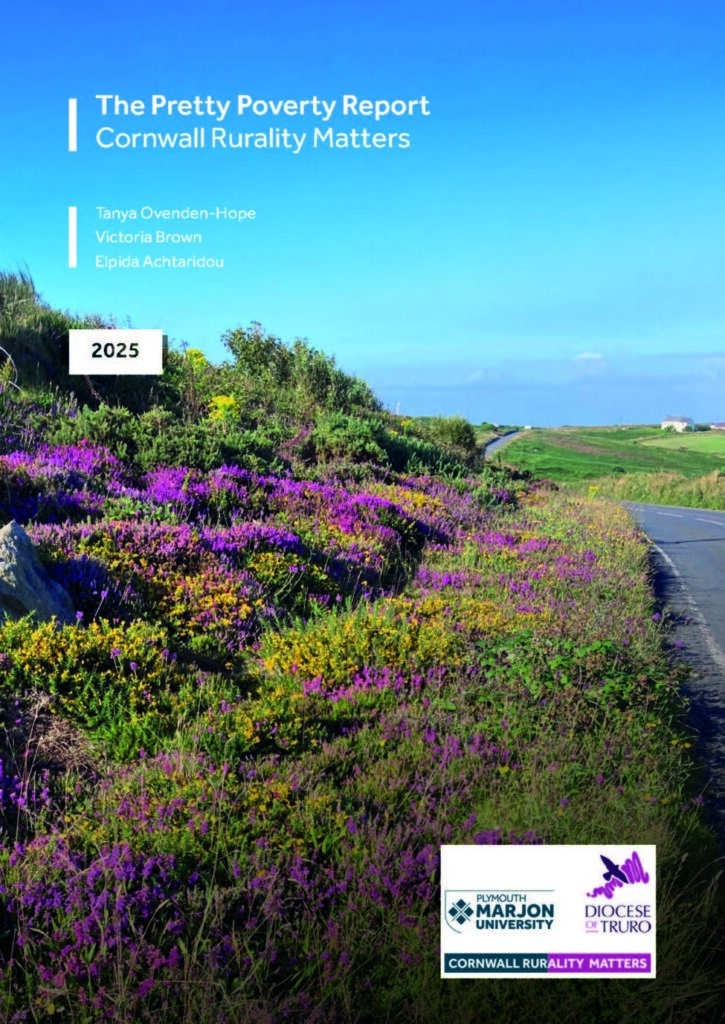

In September 2025, an academic report was published and launched in St. Dennis, a small village of around 3,000 people in rural Cornwall. The venue was the local football club hospitality building, overlooked by rolling green hills dotted with sheep and the recycling and recovery centre incinerator towers. Perhaps not the most impressive setting, but certainly a relevant one.

The report, called Pretty Poverty: Cornwall Rurality Matters, was commissioned by the Diocese of Truro and supported and carried out by Plymouth Marjon University. It shines a light on how the IMD (Index of Multiple Deprivation), the government’s standard measure of poverty, is inadequately representing poverty in rural contexts, particularly Cornwall.

The cover of the Pretty Poverty report: a colourful rural scene, with purple flowers in the foreground

Rural poverty: pockets of hardship are hidden

Due to the size of the areas the country is broken down into, the IMD masks pockets of hardship which get averaged out by nearby areas of affluence. 

Misunderstanding the importance of a car in rural areas is also a glaring error in the Government data – it is not a sign of wealth or a luxury but an essential tool to enable people to travel around rural areas without having to depend on shaky (or non-existent) public transport or the kindness and availability of friends and family. Owning a car (with road tax, insurance, and general upkeep costs) imposes a ‘rural tax’ on people who live outside of cities and larger towns.

For those of us who live and work in these areas, there isn’t a lot of ‘new news’, but the importance of having a scientifically researched academic paper which gives credence to all our anecdotal, lived experiences is so important.

Rural poverty: a funding shift is needed

Perran Moon, MP for Camborne and Redruth, wrote in his foreword for the report, “I have said it before, and it bears repeating: there is no single, sweeping reform – no matter how radical – that can reset the pressures that Cornwall faces. But a crucial first step, as this report outlines, is to ensure that funding distribution reflects the unique characteristics of remote coastal areas like ours.’.

People sitting at tables, with one person writing on a large flip-chart sheet on the table
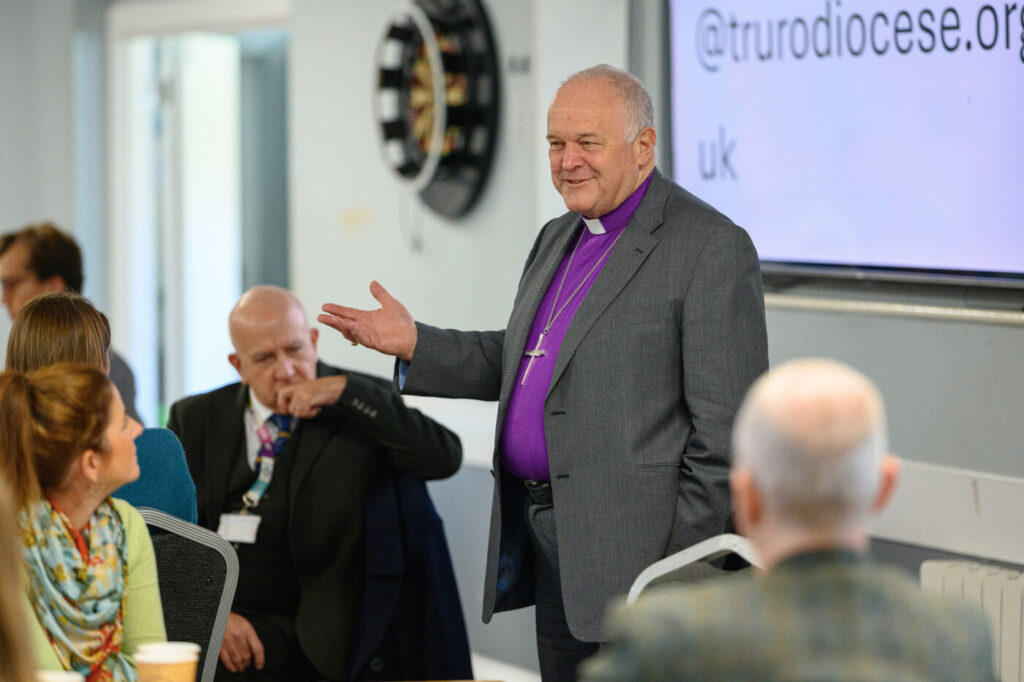
A clergyman in a purple shirt is standing speaking in a meeting room, with other people sitting at tables
The Rt Rev David Williams, Bishop of Truro, speaks at the launch of Pretty Poverty. Picture by PR4Photos.

Rural poverty: church at the forefront

The Rt Revd David Williams, Bishop of Truro (pictured above), said: “The church here has always looked beyond the pretty views, and beyond our well-placed pride in Cornwall, and understood what lies deeper. That’s why the church is at the forefront of work through foodbanks, debt advice, crisis support, education, and a thousand other ways to be Good News for those most in need.”.

What does it mean for Cornwall - and other rural communities?

But what does this mean for Cornwall?

As a Diocese, we are already having conversations about how the outcomes of this will affect the work we do and how we do it. How might you and your organisation or church take the outcomes of Pretty Poverty and look at your context differently? What changes might need to be made in your local area to make a deep impact to those in need?

This research, focussed on six areas in Cornwall, is not just for Cornwall, however. Our hope and prayer is that the government takes notice of this report and changes the way they measure deprivation in rural areas across the country.

Do spend some time reading the report and use what connections you have to share it with your local MP and local leaders.

Paul Phillips is social responsibility officer at the Diocese of Truro.

How should churches address rural poverty?

Faith In The City: why it still matters, 40 years on

Pantries reach 1 million visits – as new research proves they work

Grief is hard enough: it’s time to improve funeral support

New toolkit: Hosting a regional anti-poverty roundtable

Review: The Perils of Universal Credit

Annual review 2024-25

On poverty and justice: A sermon and prayer for this week

New: The Autumn 2025 Spark newsletter

Prayer, care and action: how Christians should respond to injustice

The amazing 11-year-olds uniting a community through food

Make Them Pay: We’re backing the call for a just tax system

Glory: How I’m striving for change and a better society

A gentle path through a field in the foreground, with a church steeple in the distance among some trees.

How should churches address rural poverty?

The top section of a book cover, reading Celebrating Forty Years of Faith In The City

Faith In The City: why it still matters, 40 years on

A line of people holding cardboard numbers reading 1,000,000

Pantries reach 1 million visits – as new research proves they work

A line of people holding cardboard numbers reading 1,000,000

Community breakfast held to mark millionth visit

New research shows Pantries improve people’s health, reduce worries and reunite communities

Thank you for your amazing support!

Pantries now save members £27 per visit, with total savings of £6.9m a year across the UK

17 November 2025
A line of people holding cardboard numbers reading 1,000,000

We’re thrilled today to announce that the Your Local Pantry network has reached its one millionth visit – at the same time as new findings show more clearly than ever that Pantries are successfully preventing people from falling into acute crisis.

We marked the milestone moment with a community breakfast event for members, supporters and friends in Birmingham, home to more Pantries than any other UK city. 

A million visits is an incredible milestone. It represents a million moments of real face-to-face community spirit in action – a million smiles, hellos, welcomes, greetings, shared laughs, comforting shoulders, and friendship and more. 

A large rectangular cake with the Your Local Pantry logo and "1,000,000 visits" written on top.
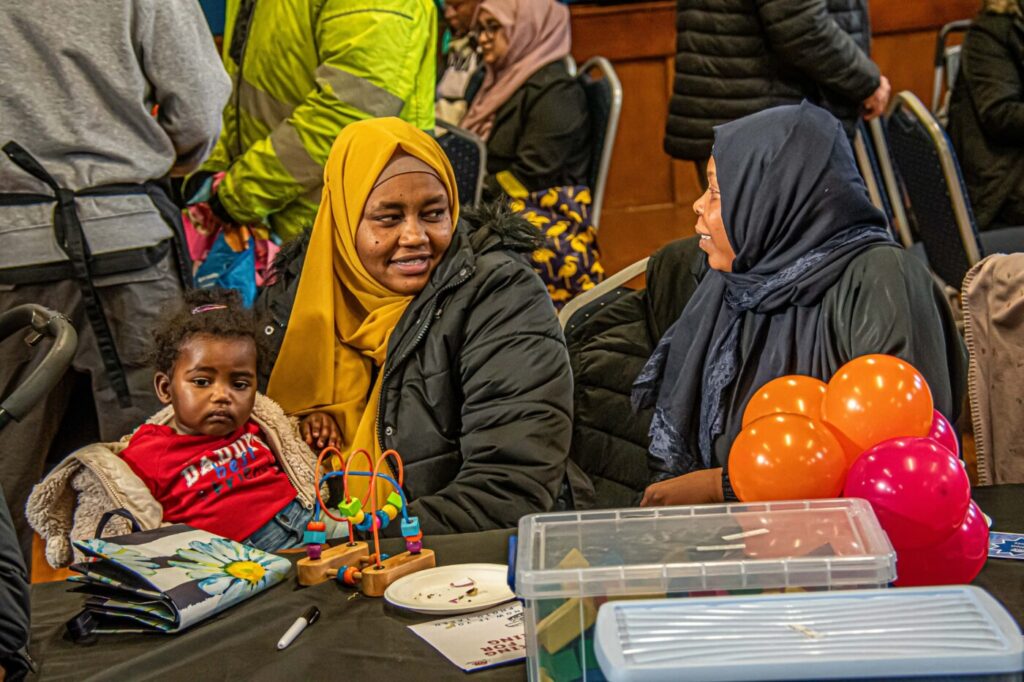
Two women and a toddler sitting chatting at a table

We’ve also completed new research into the financial value of Pantry membership. 

Members typically now save £27 each time they visit a Pantry, and over the past 12 months members across the country saved a total of £6.9 million!  

Pantries help people avoid crisis point

The millionth visit came at the same time as new research, showing that community food clubs such as Pantries are leading to a reduction in food bank usage and severe hunger.

Among Your Local Pantry members who had previously had to use a food bank, 71 per cent had been able to reduce or completely stop their food bank usage. Furthermore, 70 per cent of members who previously had to skip meals were doing so less often, since joining a Pantry or similar project.

One member said: 

“I have been able to eat meals instead of skipping them while my kids eat every meal. Before, I was skipping an evening meal every other day to make sure that there was food on the table for my children.”
Pantry member

This summer and autumn, Your Local Pantry and six similar organisations surveyed over 14,000 people who access membership-based food clubs. These projects typically operate at neighbourhood level, with local residents joining as members and accessing top-quality groceries in return for just a few pounds per visit.

Our survey found that as well as saving members money and helping them to avert crisis, Pantries are also bringing a range of social and health positives:

  • 82% of members surveyed said they feel more connected to their community
  • 97% say they’re more able to afford to eat balanced meals
  • 75% are eating more fresh fruit and vegetables
  • 83% say they feel less stressed or worried about running out of food

Pantries must be a big part of the solution

The surveys were coordinated by Feeding Britain and took place over summer 2025. An analysis of the combined results concluded that “food clubs represent one of the most promising place-based approaches to tackling hunger in the UK”. 

It said: 

“Food clubs can and must form a part of a multi-layered strategy to eliminate hunger from the UK, demonstrating that affordable, nutritious food can be a vehicle for transformation, not just survival, and that with strategic support, this transformation can be sustained and scaled.”
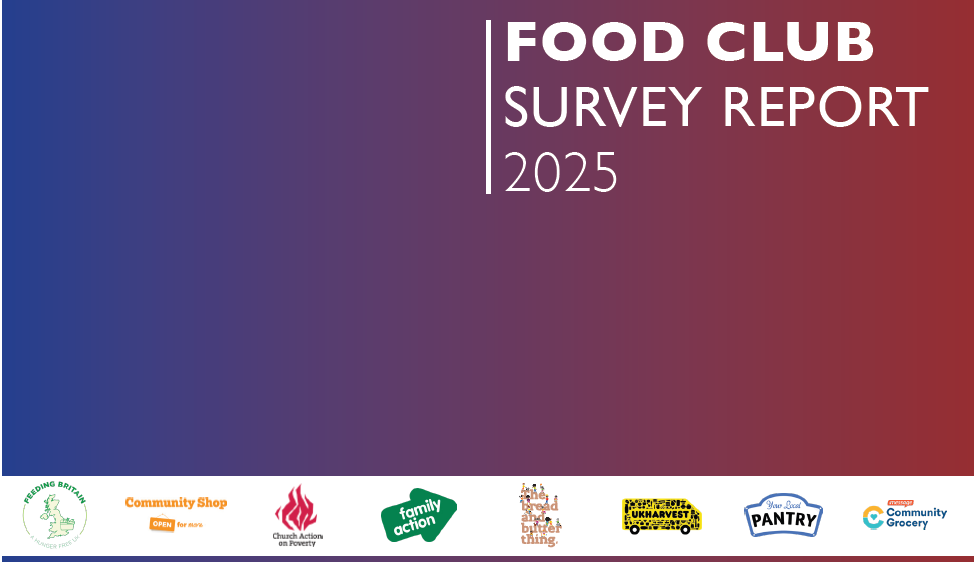
A cover image for the Food Club Survey Report 2025, including that text and several logos, on a blue-red background.
Food Club Survey Report

Pantries: What they say...

James Henderson, Your Local Pantry network coordinator: “Pantries are real places of hope that bring communities together, and enable people to unite and improve each other’s lives together. Reaching one million visits is a testament to the kindness and goodness of all the volunteers, members and supporters across the UK, but also to the effectiveness of the approach.

“Pantries are not a substitute for economic justice – the Government needs to step up to address the scandalous cost of living, and to ensure everyone has an adequate income to live on. But while we press for national change, membership food projects are incredibly transformative. Councils, faith groups or anyone else looking to make a difference would struggle to find a better way to support communities.”

Ed Powell, partner and impact manager at Co-op, a long-standing partner of Your Local Pantry: “Pantries are a progressive step forward to help local people own their access to food, and the powerful membership model has cooperation at its heart. Pantries aren’t just about food – now, more than ever, they show the power of food to bring people from different backgrounds together in community.”

Marie Gilluley, Chair of the SKylight Board in Stockport, where the first Pantries opened in 2013: “It’s remarkable to see how something that began in Stockport has grown into a network serving communities across the UK. Reaching one million visits is an important milestone and a reflection of the steady, dedicated work of our members, volunteers and partners who make each pantry possible.”

Two women sitting side by side, one with a hot drink and one with a pastry

How should churches address rural poverty?

Faith In The City: why it still matters, 40 years on

Pantries reach 1 million visits – as new research proves they work

Grief is hard enough: it’s time to improve funeral support

New toolkit: Hosting a regional anti-poverty roundtable

Review: The Perils of Universal Credit

Annual review 2024-25

On poverty and justice: A sermon and prayer for this week

New: The Autumn 2025 Spark newsletter

Prayer, care and action: how Christians should respond to injustice

The amazing 11-year-olds uniting a community through food

Make Them Pay: We’re backing the call for a just tax system

Glory: How I’m striving for change and a better society

Church Action on Poverty Sheffield: 2025 pilgrimage

Empty Plate Project lets local people be heard

We have a new Chief Exec – and we’ll continue to be a catalyst for change!

Are churches losing faith in low-income communities?

“The cuts are deeply immoral and should be opposed by all Christians”

A gentle path through a field in the foreground, with a church steeple in the distance among some trees.

How should churches address rural poverty?

The top section of a book cover, reading Celebrating Forty Years of Faith In The City

Faith In The City: why it still matters, 40 years on

A line of people holding cardboard numbers reading 1,000,000

Pantries reach 1 million visits – as new research proves they work