Reflecting together, 28 May: Whom are we serving in our services?
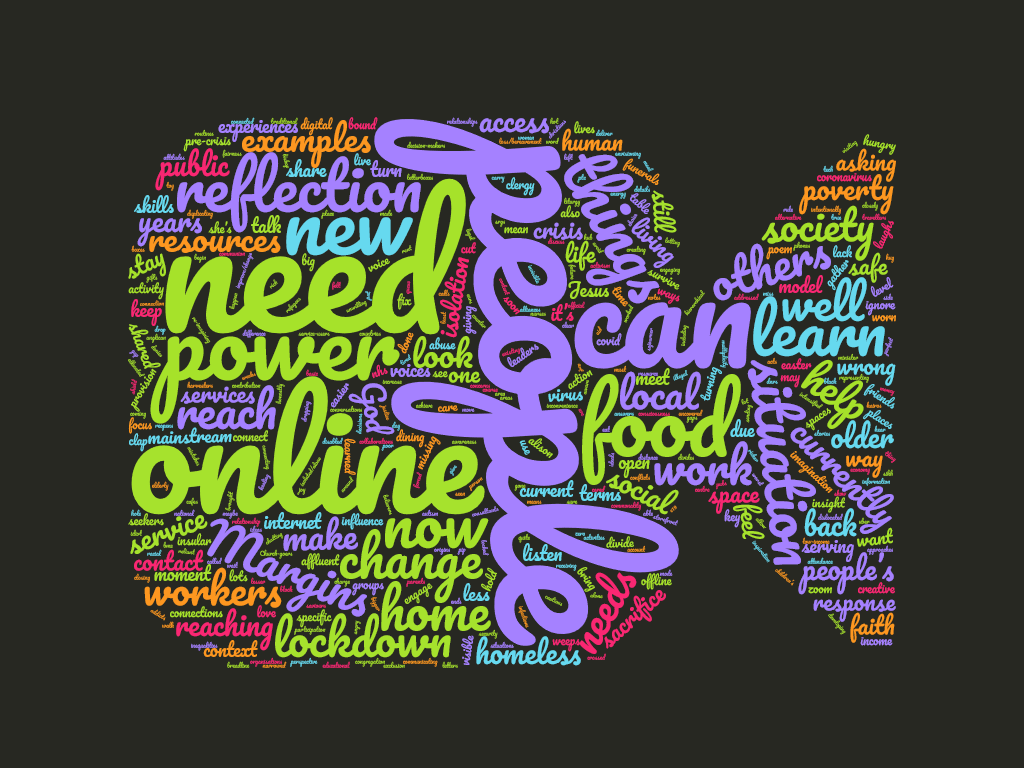
A report from our 28 May online discussions on what it means to be church on the margins during the pandemic.
Opening reflection from Revd Raj Bharath Patta, on ‘Reimagining Church Today’
How is church being missed today by the community around us?
- Online church is reaching thousands more people than before.
- Are we creating new communities – including people who were not church members before (people who were excluded or marginalised).
- Some people really miss the regular church service.
- God is present in unexpected places.
- Worship, fellowship, communion.
- What is the church for (beyond the church community/friendship)? If the church has no impact in the local community what is it for?
- During C19 we have found God in the community, mutual aid, helping people.
What is our dream if the church has to be reborn? (How do we achieve this?)
- What does ‘church membership’ mean? It does not have to be weekly attendance.
- Church language can be off-putting for new people (e.g. ‘unchurched’).
- Small dreams are important (as well as big dreams).
- Be real, authentic. Walk alongside people. Show God’s love.
- We need a liturgical revolution.
- We need to dream big – a revolution for society.
- Doughnut economics – an alternative to growth economics (see Ted Talk and book by Kate Raworth). People are stuck in the hole in middle, we need to reach out to them.
- Doughnut theology – we need the church to think in terms of people and need, not growth.
- Participation in and with the community (e.g. SRGs, Messy Church). Do not separate the church and community into ‘projects’, see it as a whole.
- Rethink the way we do ministry.
- This could be a moment of transformation for the church and wider society.
- Zoom church is more accessible for some people (e.g. families, people with disabilities).
- We need safe spaces in the community for people of different faiths to come together.
- Reflect on our activities annually and drop one to create energy for something new.

Research and Information Officer
The moral case and a 3-point plan for tax reform
Poverty is not inevitable – it is a choice we can change. Tom Burgess from Taxpayers Against Poverty outlines their new report. For many churches …
Synod is about to debate poverty. Here’s what we long to hear…
On Thursday (February 12), the Church of England General Synod debates a motion, “Poverty and the Church: 40 years after Faith In The City.” Our chief exec …
How music and art helped churches grasp poverty
Art and music are great ways to bring people together for good – as The Let’s Face It! exhibition shows Churches in the South West …
Why Christians can’t keep out of politics
This spring, Church Action on Poverty will support a course looking at combining theology and politics. James Butler of the Church Mission Society sets out …
26 in 26: 200 churches register for social justice idea
Justice is integral to our faith. Church Action on Poverty and Christian Aid have teamed up to produce a new poster that your whole church …
Pilgrims call for more support in low-income neighbourhoods
Bob Rae reports on Sheffield Church Action on Poverty’s annual pilgrimage Anti-poverty campaigners in the Sheffield neighbourhoods of Firvale, Wincobank and Firth Park are calling for major improvement …
The moral case and a 3-point plan for tax reform
Poverty is not inevitable – it is a choice we can change. Tom Burgess from Taxpayers Against Poverty outlines their …
Synod is about to debate poverty. Here’s what we long to hear…
On Thursday (February 12), the Church of England General Synod debates a motion, “Poverty and the Church: 40 years after Faith …
How music and art helped churches grasp poverty
Art and music are great ways to bring people together for good – as The Let’s Face It! exhibition shows …