New wine, new wineskins part 3: What needs to change?
This is the third and final part in a series of blogs about building a positive social vision for our life together after the pandemic.
“A revolutionary moment in the world’s history is a time for revolutions, not for patching”
(William Beveridge)
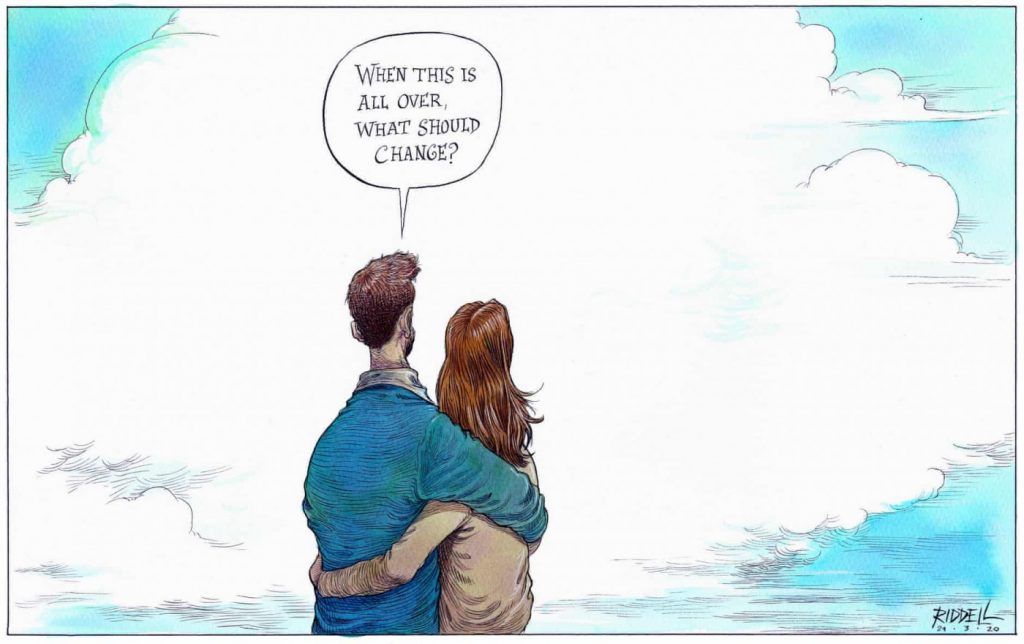
We don’t want to propose specific policies here. Rather, we are looking for the vision and values that will guide us as we journey out of the pandemic and into a new world. What would it mean if we sought to:
- Build stronger communities based on shared values of compassion and solidarity, and stronger relationships with our neighbours – including people who have been marginalised, ignored and mistrusted in the past.
- Ensure that everyone has a voice in decisions about how we build back better – most especially people who have been marginalised and excluded
- Build systems and policies that are rooted in community, security, solidarity, sharing and mutual aid, rather than competition and profit.
- Invest properly in the public services that express our interdependence and connection to one another, including the benefits system.
“The pain and cost of rebuilding must be borne by those with the broadest shoulders, not with another 10 years of austerity,”
(Justin Welby)
Are we prepared to speak out boldly and prophetically, with a more positive vision of the future, while people still remember the deep values of community and solidarity that are sustaining us all during the pandemic?
Questions
- How can the voices of those who are usually marginalised be brought to the centre of public debates as to how we build a better society?
- What are the ways in which communities and society have responded to the pandemic that we would want to build on in future?
- What kind of ‘revolutionary ideas’ might now be more feasible and help create a fairer society which enables us all to be more secure and more resilient in future? What would we need to do to bring them about?
Communications and Supporter Relations Manager
What happens when churches share power?
That’s what we sought to find out, with a collaborative church project last year…. Sharing Power to Shape Mission was a series of intentional conversations …
Church Action on Poverty North East AGM
The 2026 AGM for Church Action on Poverty North East will be held on Wednesday 29 April. It takes place at St Joseph’s Church, High …
Food, faith & fellowship: 4 churches’ stories
Read four stories of churches nurturing faith and fellowship through food. St Cleopas, Dingle, Liverpool: “We find out a lot from people when they come” …
The moral case and a 3-point plan for tax reform
Poverty is not inevitable – it is a choice we can change. Tom Burgess from Taxpayers Against Poverty outlines their new report. For many churches …
Synod is about to debate poverty. Here’s what we long to hear…
On Thursday (February 12), the Church of England General Synod debates a motion, “Poverty and the Church: 40 years after Faith In The City.” Our chief exec …
How music and art helped churches grasp poverty
Art and music are great ways to bring people together for good – as The Let’s Face It! exhibition shows Churches in the South West …
Why Christians can’t keep out of politics
This spring, Church Action on Poverty will support a course looking at combining theology and politics. James Butler of the Church Mission Society sets out …
What happens when churches share power?
That’s what we sought to find out, with a collaborative church project last year…. Sharing Power to Shape Mission was …
Church Action on Poverty North East AGM
The 2026 AGM for Church Action on Poverty North East will be held on Wednesday 29 April. It takes place …
Food, faith & fellowship: 4 churches’ stories
Read four stories of churches nurturing faith and fellowship through food. St Cleopas, Dingle, Liverpool: “We find out a lot …
Comments (04)
Comments are closed.