fbpx

Covid pulled us deep into debt. It’ll be years before we are free.

Maria lives with her husband and two young children. They were paying off their debts, when Covid struck and swept them them into deeper difficulties.

This is her story.

“In March, my husband lost his job. I am not working either, and we already had some debt before that, so had financial difficulties. When he lost his job, our situation got even worse.

“It took two months to get our Universal Credit, and in those two months the situation was really not good at all. We had to borrow from friends and family. My husband has now got a new job, but it will take some time to get rid of the debt.

“At the time when he was not working, it was hard. We hardly bought any food. I went to food banks, and used the local community pantry. There, you pay £4 and get at least ten products, but we hardly entered any shops; we just used local support for food.

“We have two young children, and with difficulty we’ve not bought any clothes or toys. We’ve had some donated from local organisations or friends.

Our mental health has suffered

“Mentally, it has affected me. Even before this pandemic started, my husband was quite depressed and had anxiety. He felt he was the one who had to support us, and provide for the family’s future, and the job he did have had been hard to get.

“He had been unemployed for 18 months before getting that. He was doing really well at work and had been there nearly two years, but they made him and some other people redundant in March when the pandemic hit. He was not furloughed, just made redundant.

“It affected his mental health and mine, especially at the beginning of March when things suddenly dropped and we could not see when things would improve. There were no jobs available, and then when they started to become available again the competition was so high.”

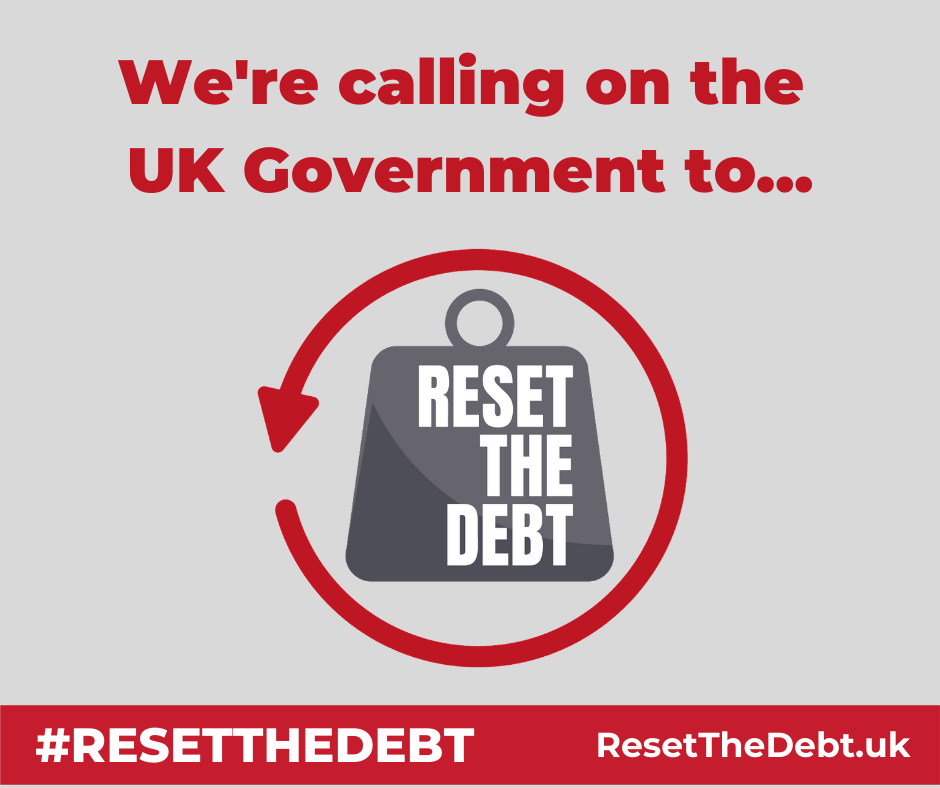
Maria spoke up to support the Reset The Debt campaign, which calls on the Government to help families burdened with Covid-related debt

“We used the food bank and the pantry and some friends gave us clothes for the children. We also borrowed from friends. Credit card bills, money from friends and a loan we already had mean our debt is about £15,000. It was around £7,000 but we’ve had to borrow from friends.

“Even though my husband has a job now, we still need help from the pantry and food bank. We really need to start paying the debts back.” 

We don't want the children to know our struggles

“This time of year is very busy for us. As well as Christmas it’s also both the children’s birthdays. I want the children not to notice the struggles, and to still have a happy childhood. We have had some toys donated from friends, and luckily they are at the age where they won’t know if they’re new from a shop or not.

“Normally, once a year, we like to go and visit my family who live abroad, but I’ve not been for a while now, and the travel rules and our money situation this year mean we can’t.

“We’ve not been able to really buy anything for the house either. It needs some repairs but we can’t afford to repair anything. It’s very difficult; there are everyday comforts we can’t afford. The sink has a big crack in it but we can’t afford to replace it.”

“We were able to get a three-month mortgage holiday but not longer. Once you have a house and mortgage, you don’t expect things to go bad, but they did. We do have some very good friends and we want to pay them back as soon as possible.”

  • ‘Maria’ is a pseudonym

What happens when churches share power?

Church Action on Poverty North East AGM

Food, faith & fellowship: 4 churches’ stories

The moral case and a 3-point plan for tax reform

Synod is about to debate poverty. Here’s what we long to hear…

How music and art helped churches grasp poverty

Why Christians can’t keep out of politics

26 in 26: 200 churches register for social justice idea

Pilgrims call for more support in low-income neighbourhoods

How should churches address rural poverty?

A group of people in a church hall, facing the camera, beside an artificial tree decorated with paper mesages.

What happens when churches share power?

Church Action on Poverty North East AGM

A collage of 3 photos. On the left: three people standing outside a church community building. Centre: Two cafe guests in very bright pink jackets. Right: two people sitting at a table, smiling at the camera.

Food, faith & fellowship: 4 churches’ stories