
We came up with a number of different answers to this question when a group of us gathered together in Sheffield on a sunny and rainy day in May, in a church that’s on a bit of a border itself: it’s on a boundary between two parts of the city that are subtly yet significantly different in terms of the life chances of those who live there.
We were meeting as part of a reflection day for a new ecumenical network of people who are working in churches ‘on the margins’ in South Yorkshire, set up by Church Action on Poverty. We are people who want to challenge injustice, build solidarity between the church and people marginalised by society, and recognise the spirit at work all over our community!
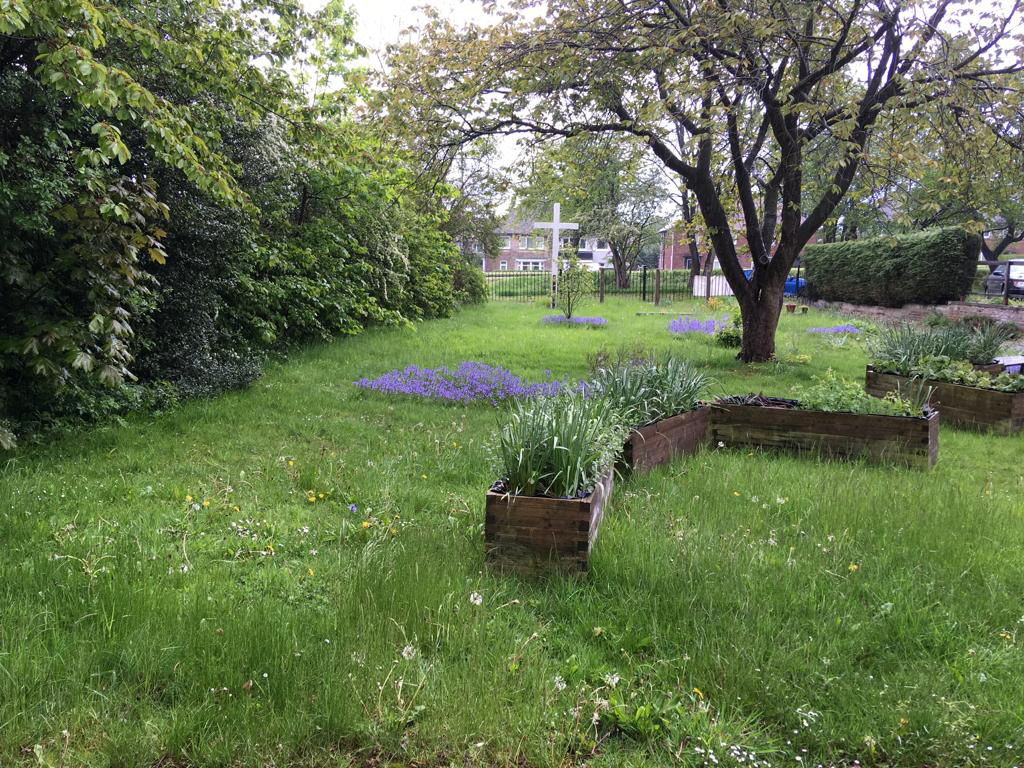
So what does it mean to be a church on the margins? Maybe it means pushing back against institutional pressure to shut down buildings that have dwindling populations in poorer areas. Maybe it’s the thin places. Maybe church on the margins is just, well, church? My favourite suggestion was that we stop thinking about the margins and start talking about church on the fringe. Fringe festivals are exciting, edgy; experiments happens, and we take risks on people we don’t know anything about. Shouldn’t church be a bit like that?
Reflecting together
Our day together was a chance to reflect on our own discipleship and explore our vision for our own churches and communities. I’ll tell you what we got up to, in case it’s helpful for your church.
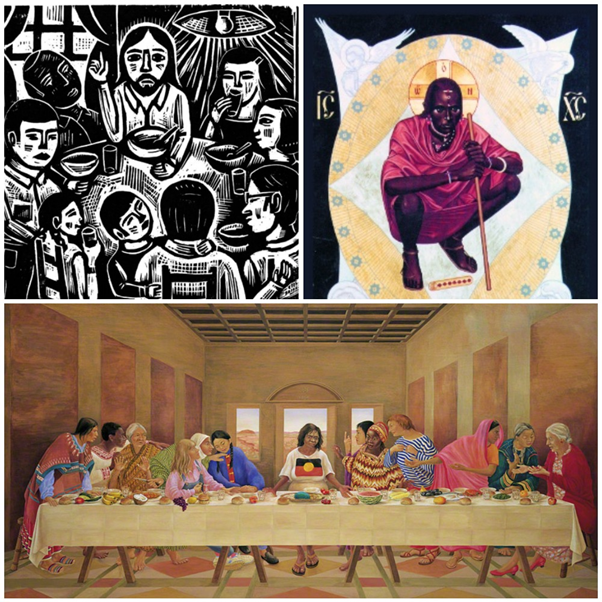
After introducing ourselves – sharing our name and our pronoun and a little about our communities – we kicked off by looking at different images of Jesus, and picking out one that spoke to us. We had loads of them; here are three. What reaction do you have to them?
We then did what’s known as a ‘living’ Bible study, looking at the story of Jesus healing a man with leprosy, written about in the Gospel of Mark. We read the story a few times out loud, and then everyone was given a role and had to imagine they were Jesus, the person with leprosy, one of the onlookers, one of Jesus’ disciples, or one of the religious leaders.
In the story, the crowd drew back when they heard the leper’s bell ringing in case they were defiled by coming into contact with him, but Jesus had been sent by God to proclaim good news to the poor and destitute. The disciples and everyone else witness something outrageous, when Jesus transforms both the man’s disease, and his banishment from society. Before that, he’d been seen as unclean physically and religiously, because he is excluded from the worshipping community.
We started to ask who we exclude from our worshipping communities. Who do we not want to touch?
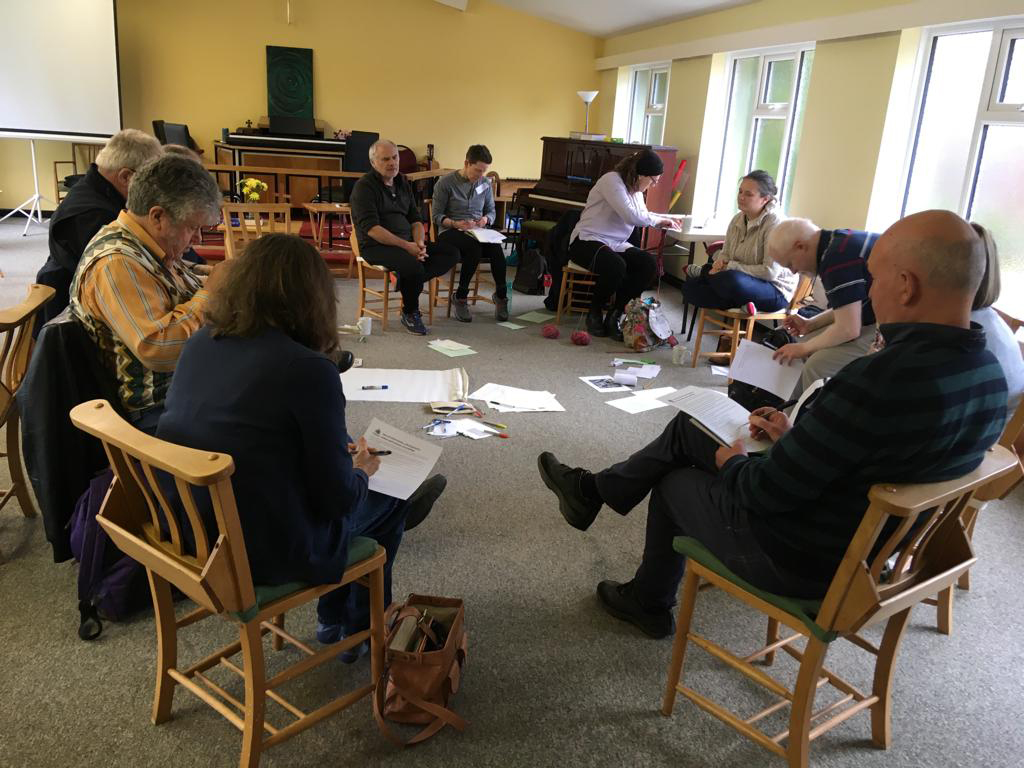
Next we shared stories we’d thought about in advance, of where we’ve seen the Spirit at work in what might be called the ‘margins’ of our society. Geoff talked about the man who comes to a group he’s part of and how he says it’s the only place he’s not viewed only as an addict, but something more than that. Alex talked about how they got drawn back to church when they came across one that was campaigning on behalf of a gay person seeking sanctuary. We heard lots of exciting things.
(We are not using people’s real names.)
Over a hearty lunch, Lisa showed us the art project she’d run with a local church, and the beautiful drawings she’d co-created with people in the community that got them interested in church, and coming to the coffee mornings.
In the afternoon, we shared some quiet time. Some people sat and drew, or wrote. Some people went for a walk in the rain. We were thinking about various questions, like:
- Who likes going to your church? Why do they like it?
- Who don’t you see in your church usually? How well does your church community reflect the geographical community it’s in?
- What do you think it would be like if you were to visit your church for the first time: if you were Deaf; if you were a newly-arrived person seeking sanctuary, with English as an additional language; if you used a wheelchair; if you were a trans woman; if you used a food bank run from that church (choosing one that didn’t apply to us).
After sharing our responses, we closed a day of meeting old and new friends with a blessing (thanks to jesuitresource.org):
May the God who created a world of diversity and vibrancy
Go with us as we embrace life in all its fullnessMay the Son who teaches us to care for strangers and foreigners
Go with us as we try to be good neighbours in our communitiesMay the Spirit who breaks down our barriers and celebrates community
Go with us as we find the courage to create a place of welcome for all
Resources
We gave people some useful resources to take away and mull over, like…
- Why we need to be ‘a church for the poor’
- How to tell if your church is welcoming for transgender people,
- Stop trying to ‘heal’ me
- The wounded psyche of white privilege
I hope they’ll be useful to you, too.
I hope we can work together as a group in the future. I think we need time together to fuel up for our work living church in this way. Watch this space.
Hannah Brock Womack is working to support our ‘community of praxis’ in Sheffield.
Photos: Sarah Purcell